AlphaFold predicted structure
DHX16 · O60231
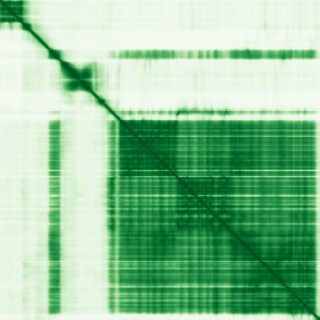
Mean pLDDT
77.7/ 100
Confident
1,041 residues
Confidence breakdown
- Very high(≥ 90)29%
- Confident(70–90)48%
- Low(50–70)8%
- Very low(< 50)14%
AlphaFold (Jumper et al., 2021) · CC BY 4.0
DEAH-box helicase 16
Annotations refreshed 9 hours ago.
Moderate Evidence (Amber)
Congenital myopathy
MONOALLELIC, autosomal or pseudoautosomal, NOT imprintedEarly onset or syndromic epilepsy
MONOALLELIC, autosomal or pseudoautosomal, imprinted status unknownDDG2P
MONOALLELIC, autosomal or pseudoautosomal, imprinted status unknownneuromuscular disease and ocular or auditory anomalies with or without seizures
hereditary disease
Neurodevelopmental delay
dengue disease
neurodevelopmental disorder
Intellectual disability
Seizure
Reduced renal corticomedullary differentiation
Enlarged kidney
Multiple renal cysts
Score is the Open Targets composite evidence score (0-1). Higher = stronger gene-disease association.
Pre-mRNA-splicing factor ATP-dependent RNA helicase DHX16
Required for pre-mRNA splicing as a component of the spliceosome (PubMed:20423332, PubMed:20841358, PubMed:25296192, PubMed:29360106). Contributes to pre-mRNA splicing after spliceosome formation and prior to the first transesterification reaction. As a component of the minor spliceosome, involved in the splicing of U12-type introns in pre-mRNAs (Probable). Also plays a role in innate antiviral response by acting as a pattern recognition receptor sensing splicing signals in viral RNA (PubMed:35263596). Mechanistically, TRIM6 promotes the interaction between unanchored 'Lys-48'-polyubiquitin chains and DHX16, leading to DHX16 interaction with RIGI and ssRNA to amplify RIGI-dependent innate antiviral immune responses (PubMed:35263596)
DHX16 · O60231

Mean pLDDT
77.7/ 100
Confident
1,041 residues
Confidence breakdown
AlphaFold (Jumper et al., 2021) · CC BY 4.0