AlphaFold predicted structure
DHX30 · Q7L2E3
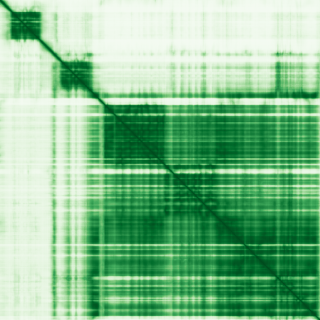
Mean pLDDT
81.1/ 100
Confident
1,194 residues
Confidence breakdown
- Very high(≥ 90)49%
- Confident(70–90)34%
- Low(50–70)6%
- Very low(< 50)12%
AlphaFold (Jumper et al., 2021) · CC BY 4.0
DExH-box helicase 30
Annotations refreshed 10 hours ago.
Diagnostic Grade (Green)
DDG2P
MONOALLELIC, autosomal or pseudoautosomal, imprinted status unknownEarly onset or syndromic epilepsy
MONOALLELIC, autosomal or pseudoautosomal, imprinted status unknownFetal anomalies
MONOALLELIC, autosomal or pseudoautosomal, NOT imprintedIntellectual disability
MONOALLELIC, autosomal or pseudoautosomal, imprinted status unknownEctodermal dysplasia
MONOALLELIC, autosomal or pseudoautosomal, imprinted status unknownneurodevelopmental disorder with severe motor impairment and absent language
neurodegenerative disease
hereditary disease
neurodevelopmental disorder
microcephaly
Global developmental delay
Strabismus
Short stature
Intellectual disability
Hearing impairment
Score is the Open Targets composite evidence score (0-1). Higher = stronger gene-disease association.
ATP-dependent RNA helicase DHX30
RNA-dependent helicase (PubMed:29100085). Plays an important role in the assembly of the mitochondrial large ribosomal subunit (PubMed:25683715, PubMed:29100085). Required for optimal function of the zinc-finger antiviral protein ZC3HAV1 (By similarity). Associates with mitochondrial DNA (PubMed:18063578). Involved in nervous system development and differentiation through its involvement in the up-regulation of a number of genes which are required for neurogenesis, including GSC, NCAM1, neurogenin, and NEUROD (By similarity)
DHX30 · Q7L2E3

Mean pLDDT
81.1/ 100
Confident
1,194 residues
Confidence breakdown
AlphaFold (Jumper et al., 2021) · CC BY 4.0