AlphaFold predicted structure
DLL4 · Q9NR61
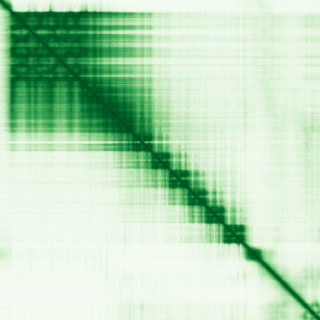
Mean pLDDT
74.9/ 100
Confident
685 residues
Confidence breakdown
- Very high(≥ 90)35%
- Confident(70–90)34%
- Low(50–70)11%
- Very low(< 50)20%
AlphaFold (Jumper et al., 2021) · CC BY 4.0
delta like canonical Notch ligand 4
Annotations refreshed 9 hours ago.
Diagnostic Grade (Green)
Clefting
MONOALLELIC, autosomal or pseudoautosomal, imprinted status unknownDDG2P
MONOALLELIC, autosomal or pseudoautosomal, imprinted status unknownFetal anomalies
MONOALLELIC, autosomal or pseudoautosomal, imprinted status unknownLimb disorders
MONOALLELIC, autosomal or pseudoautosomal, imprinted status unknownSkeletal dysplasia
MONOALLELIC, autosomal or pseudoautosomal, NOT imprintedIntellectual disability
MONOALLELIC, autosomal or pseudoautosomal, imprinted status unknownAdams-Oliver syndrome
cancer
aplasia cutis congenita
neurodegenerative disease
intelligence
hereditary disease
neoplasm
gastric cancer
hepatocellular carcinoma
non-small cell lung carcinoma
Score is the Open Targets composite evidence score (0-1). Higher = stronger gene-disease association.
Delta-like protein 4
Involved in the Notch signaling pathway as Notch ligand (PubMed:11134954). Activates NOTCH1 and NOTCH4. Involved in angiogenesis; negatively regulates endothelial cell proliferation and migration and angiogenic sprouting (PubMed:20616313). Essential for retinal progenitor proliferation. Required for suppressing rod fates in late retinal progenitors as well as for proper generation of other retinal cell types (By similarity). During spinal cord neurogenesis, inhibits V2a interneuron fate (PubMed:17728344)
DLL4 · Q9NR61

Mean pLDDT
74.9/ 100
Confident
685 residues
Confidence breakdown
AlphaFold (Jumper et al., 2021) · CC BY 4.0