AlphaFold predicted structure
DNAJB11 · Q9UBS4
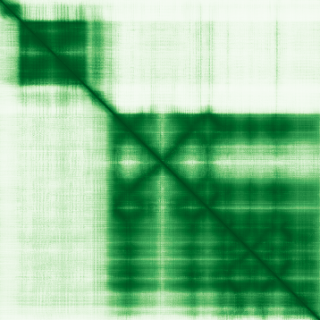
Mean pLDDT
84.1/ 100
Confident
358 residues
Confidence breakdown
- Very high(≥ 90)56%
- Confident(70–90)28%
- Low(50–70)6%
- Very low(< 50)11%
AlphaFold (Jumper et al., 2021) · CC BY 4.0
DnaJ heat shock protein family (Hsp40) member B11
Annotations refreshed 10 hours ago.
Diagnostic Grade (Green)
Cystic kidney disease
MONOALLELIC, autosomal or pseudoautosomal, NOT imprintedDuctal plate malformation
MONOALLELIC, autosomal or pseudoautosomal, imprinted status unknownFetal anomalies
MONOALLELIC, autosomal or pseudoautosomal, imprinted status unknownPolycystic liver disease
MONOALLELIC, autosomal or pseudoautosomal, imprinted status unknownTubulointerstitial kidney disease
MONOALLELIC, autosomal or pseudoautosomal, NOT imprintedpolycystic kidney disease 6 with or without polycystic liver disease
autosomal dominant polycystic kidney disease
hereditary disease
polycystic kidney disease
cystic kidney disease
dengue disease
familial juvenile hyperuricemic nephropathy
stage 5 chronic kidney disease
Renal cyst
Meckel syndrome
Score is the Open Targets composite evidence score (0-1). Higher = stronger gene-disease association.
DnaJ homolog subfamily B member 11
As a co-chaperone for HSPA5 it is required for proper folding, trafficking or degradation of proteins (PubMed:10827079, PubMed:15525676, PubMed:29706351). Binds directly to both unfolded proteins that are substrates for ERAD and nascent unfolded peptide chains, but dissociates from the HSPA5-unfolded protein complex before folding is completed (PubMed:15525676). May help recruiting HSPA5 and other chaperones to the substrate. Stimulates HSPA5 ATPase activity (PubMed:10827079). It is necessary for maturation and correct trafficking of PKD1 (PubMed:29706351)
DNAJB11 · Q9UBS4

Mean pLDDT
84.1/ 100
Confident
358 residues
Confidence breakdown
AlphaFold (Jumper et al., 2021) · CC BY 4.0