
AlphaFold predicted structure
DNAJC6 · O75061
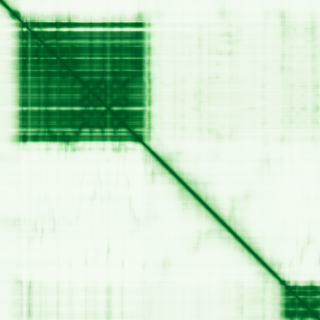
Mean pLDDT
62.9/ 100
Low
913 residues
Confidence breakdown
- Very high(≥ 90)28%
- Confident(70–90)18%
- Low(50–70)7%
- Very low(< 50)47%
Open interactive 3D viewer
AlphaFold (Jumper et al., 2021) · CC BY 4.0
DnaJ heat shock protein family (Hsp40) member C6
Annotations refreshed 3 months ago.
Diagnostic Grade (Green)
Adult onset dystonia, chorea or related movement disorder
BIALLELIC, autosomal or pseudoautosomalAdult onset neurodegenerative disorder
BIALLELIC, autosomal or pseudoautosomalChildhood onset dystonia, chorea or related movement disorder
BIALLELIC, autosomal or pseudoautosomalEarly onset or syndromic epilepsy
BIALLELIC, autosomal or pseudoautosomalParkinson Disease and Complex Parkinsonism
BIALLELIC, autosomal or pseudoautosomalYoung adult-onset Parkinsonism
atypical juvenile parkinsonism
Parkinson disease 19B, early-onset
young-onset Parkinson disease
neurodegenerative disease
juvenile-onset diabetes mellitus-central and peripheral neurodegeneration syndrome
hereditary disease
Familial prostate cancer
prostate cancer
Parkinson disease
Score is the Open Targets composite evidence score (0-1). Higher = stronger gene-disease association.
Auxilin
May act as a protein phosphatase and/or a lipid phosphatase. Co-chaperone that recruits HSPA8/HSC70 to clathrin-coated vesicles (CCVs) and promotes the ATP-dependent dissociation of clathrin from CCVs and participates in clathrin-mediated endocytosis of synaptic vesicles and their recycling and also in intracellular trafficking (PubMed:18489706). Firstly, binds tightly to the clathrin cages, at a ratio of one DNAJC6 per clathrin triskelion. The HSPA8:ATP complex then binds to the clathrin-auxilin cage, initially at a ratio of one HSPA8 per triskelion leading to ATP hydrolysis stimulation and causing a conformational change in the HSPA8. This cycle is repeated three times to drive to a complex containing the clathrin-auxilin cage associated to three HSPA8:ADP complex. The ATP hydrolysis of the third HSPA8:ATP complex leads to a concerted dismantling of the cage into component triskelia. Then, dissociates from the released triskelia and be recycled to initiate another cycle of HSPA8's recruitment. Also acts during the early steps of clathrin-coated vesicle (CCV) formation through its interaction with the GTP bound form of DNM1 (By similarity)
DNAJC6 · O75061
Mean pLDDT
62.9/ 100
Low
913 residues
Confidence breakdown
AlphaFold (Jumper et al., 2021) · CC BY 4.0