Skip to content
GenoLensGenoLens

DOCK7

Chr 1p31.3

dedicator of cytokinesis 7

Aliases:
KIAA1771, ZIR2
MANE:
ENST00000635253.2

Annotations refreshed 1 month ago.

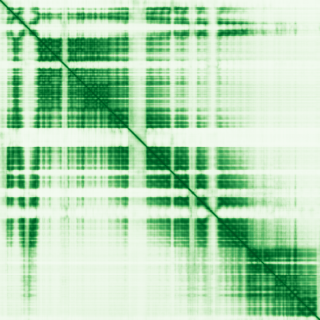
Predicted protein structure

Clinical relevance (Genomics England PanelApp)

Diagnostic Grade (Green)

  • DDG2P

    BIALLELIC, autosomal or pseudoautosomal
  • Early onset or syndromic epilepsy

    BIALLELIC, autosomal or pseudoautosomal
  • Intellectual disability

    BIALLELIC, autosomal or pseudoautosomal
  • Fetal anomalies

    BIALLELIC, autosomal or pseudoautosomal

Disease associations (Open Targets)

  • genetic developmental and epileptic encephalopathy

    0.74
  • familial hypobetalipoproteinemia 2

    0.52
  • hereditary disease

    0.49
  • early-infantile DEE

    0.37
  • Hypercholesterolemia

    0.33
  • metabolic syndrome

    0.30
  • metabolic disease

    0.29
  • alcohol drinking

    0.28
  • familial lipoprotein lipase deficiency

    0.28
  • fetal akinesia deformation sequence 1

    0.27

Score is the Open Targets composite evidence score (0-1). Higher = stronger gene-disease association.

Protein function (UniProt)

Dedicator of cytokinesis protein 7

Functions as a guanine nucleotide exchange factor (GEF), which activates Rac1 and Rac3 Rho small GTPases by exchanging bound GDP for free GTP. Does not have a GEF activity for CDC42. Required for STMN1 'Ser-15' phosphorylation during axon formation and consequently for neuronal polarization (PubMed:16982419). As part of the DISP complex, may regulate the association of septins with actin and thereby regulate the actin cytoskeleton (PubMed:29467281). Has a role in pigmentation (By similarity). Involved in the regulation of cortical neurogenesis through the control of radial glial cells (RGCs) proliferation versus differentiation; negatively regulates the basal-to-apical interkinetic nuclear migration of RGCs by antagonizing the microtubule growth-promoting function of TACC3 (By similarity)

Curated MONDO disease pages that list DOCK7 among their top associated genes.

Data sources: HGNC (CC BY 4.0), AlphaFold (CC BY 4.0, Jumper et al. Nature 2021), Genomics England PanelApp (CC BY 4.0), ClinGen, Open Targets (CC0), UniProt.

Not for sole clinical decision-making. Always verify against primary sources.