
AlphaFold predicted structure
DSG2 · Q14126
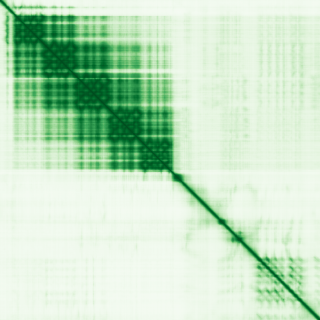
Mean pLDDT
64.5/ 100
Low
1,118 residues
Confidence breakdown
- Very high(≥ 90)42%
- Confident(70–90)10%
- Low(50–70)4%
- Very low(< 50)45%
Open interactive 3D viewer
AlphaFold (Jumper et al., 2021) · CC BY 4.0
desmoglein 2
Annotations refreshed 3 months ago.
Diagnostic Grade (Green)
Arrhythmogenic right ventricular cardiomyopathy
MONOALLELIC, autosomal or pseudoautosomal, NOT imprintedDilated and arrhythmogenic cardiomyopathy
MONOALLELIC, autosomal or pseudoautosomal, NOT imprintedPaediatric or syndromic cardiomyopathy
MONOALLELIC, autosomal or pseudoautosomal, NOT imprintedCOVID-19 research
UnknownDilated Cardiomyopathy and conduction defects
MONOALLELIC, autosomal or pseudoautosomal, NOT imprintedHereditary neuropathy
Hereditary neuropathy or pain disorder
Ichthyosis and erythrokeratoderma
MONOALLELIC, autosomal or pseudoautosomal, imprinted status unknown+2 more panels — install the extension to see the full list inline on any page.
arrhythmogenic right ventricular dysplasia 10
Arrhythmogenic right ventricular dysplasia
dilated cardiomyopathy 1BB
arrhythmogenic right ventricular cardiomyopathy
familial isolated dilated cardiomyopathy
Abnormality of the cardiovascular system
cardiomyopathy
atrial fibrillation
familial isolated arrhythmogenic right ventricular dysplasia
dilated cardiomyopathy
Score is the Open Targets composite evidence score (0-1). Higher = stronger gene-disease association.
Desmoglein-2
A component of desmosome cell-cell junctions which are required for positive regulation of cellular adhesion (PubMed:17559062, PubMed:38395410). Involved in the interaction of plaque proteins and intermediate filaments mediating cell-cell adhesion. Required for proliferation and viability of embryonic stem cells in the blastocyst, thereby crucial for progression of post-implantation embryonic development (By similarity). Maintains pluripotency by regulating epithelial to mesenchymal transition/mesenchymal to epithelial transition (EMT/MET) via interacting with and sequestering CTNNB1 to sites of cell-cell contact, thereby reducing translocation of CTNNB1 to the nucleus and subsequent transcription of CTNNB1/TCF-target genes (PubMed:29910125). Promotes pluripotency and the multi-lineage differentiation potential of hematopoietic stem cells (PubMed:27338829). Plays a role in endothelial cell sprouting and elongation via mediating the junctional-association of cortical actin fibers and CDH5 (PubMed:27338829). Promotes cardiomyocyte cell homeostasis and desmosome junction formation at intercalated disks, as a result plays a role in the maintenance of cardiac conduction and heart chamber integrity (By similarity). Positively regulates pancreatic islet development and maintenance of endothelial cell barrier integrity in the pancreas, therefore involved in the controlled release of insulin from islet cells into the circulation in response to glucose (By similarity). Plays a role in limiting inflammatory infiltration and the apoptotic response to injury in kidney tubular epithelial cells, potentially via its role in maintaining cell-cell adhesion and the epithelial barrier (PubMed:38395410). Acts as a positive modulator of CSK and EGFR activation via sequestering them away from lipid rafts, this is independent of its role in desmosome cell junctions (PubMed:26918609). Also disrupts the localization of CAV1 to lipid rafts resulting in its distribution throughout the cytoplasm (PubMed:26918609)
DSG2 · Q14126
Mean pLDDT
64.5/ 100
Low
1,118 residues
Confidence breakdown
AlphaFold (Jumper et al., 2021) · CC BY 4.0