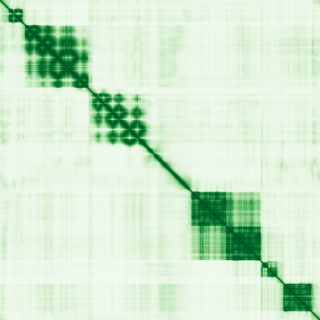
Score is the Open Targets composite evidence score (0-1). Higher = stronger gene-disease association.
Protein function (UniProt)
Desmoplakin
A component of desmosome cell-cell junctions which are required for positive regulation of cellular adhesion (PubMed:25733715). Critical for cell-cell adhesion in early stage blastocysts and progression through proamniotic cavity formation (By similarity). Not required for preimplantation morphogenic process in blastocysts (By similarity). Required for keratin filament anchoring at the desmosome junction and subsequent organization of the keratin intermediate filament network within the cytoplasm (By similarity). Required for anchoring of desmosomes to the microtubule architecture, via its interaction with NIN (By similarity). Promotes microtubule-mediated GJA1/CX43 trafficking to cell membranes via its interaction with MAPRE1/EB1, thereby facilitating gap junction intracellular communication (PubMed:25225338). Plays a key role in adhesion and organization of the dermal epithelial barrier (PubMed:26604139). Critical for the maintenance of the neural tube structure following formation and organization of the neuroepithelium (By similarity). Facilitates outgrowth and repair of motor neuron fibers in regenerating axons following injury, probably by promoting recruitment of a complex containing DSP, CDH2, VIM and JUP to the outgrowth tips (By similarity). Critical for the normal formation of heart and myocardial tissue during early embryogenesis (By similarity). Also required for development of vascular capillary structures and intact endothelial cell barriers (By similarity). Regulates profibrotic gene expression in cardiomyocytes via activation of the MAPK14/p38 MAPK signaling cascade and increase in TGFB1 protein abundance (By similarity). Maintains cardiac rhythmicity by ensuring correct cell-cell adhesion within the sinoatrial node, via stabilization of protein components of both desmosome and Gap junctions (By similarity). Involved in maintaining the protein stability and recruitment of GJA1 to functional gap junctions, via inhibition of KRAS-mediated MAPK1/MAPK3 phosphorylation of GJA1 (By similarity). Negative regulator of cell cycle progression and differentiation in keratinocytes, potentially via inhibition of MAPK and phosphoinositide-3-kinase (PI3K) signaling pathways (PubMed:17475244). Mediates the interaction between the desmosome and COP9 signalosome complex (CSN) protein complex (PubMed:28891468). As a result of this interaction, promotes keratinocyte differentiation via deneddylation of EGFR resulting in a reduction in EGFR protein stabilization and translocation away from the cell membrane (PubMed:28891468). Required for the maintenance of protein abundance of desmosome junction components DSG1, DSG2, DSC2, DSC3, PKP1, PKP2 and PKP3 (PubMed:17475244, PubMed:26073755). Required for the survival and maintenance of germ cells in the gonads during embryonic development (By similarity). Binds to telomere DNA (via C-terminus) and acts to prevent telomere damage and maintain telomere length via its interaction with TRF2 (PubMed:31595153)
Diseases associated with DSP
Curated MONDO disease pages that list DSP among their top associated genes.