Skip to content
GenoLensGenoLens

DST

Chr 6p12.1

dystonin

Aliases:
BP240, KIAA0728, FLJ21489, FLJ13425, FLJ32235
MANE:
ENST00000680361.1

Annotations refreshed 1 month ago.

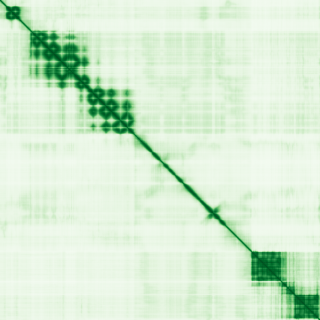
Predicted protein structure

Clinical relevance (Genomics England PanelApp)

Diagnostic Grade (Green)

  • Arthrogryposis

    BIALLELIC, autosomal or pseudoautosomal
  • Epidermolysis bullosa

    BIALLELIC, autosomal or pseudoautosomal
  • Epidermolysis bullosa and congenital skin fragility

    BIALLELIC, autosomal or pseudoautosomal
  • Fetal anomalies

    BIALLELIC, autosomal or pseudoautosomal
  • Hereditary neuropathy

    BIALLELIC, autosomal or pseudoautosomal
  • Hereditary neuropathy or pain disorder

    BIALLELIC, autosomal or pseudoautosomal
  • Paediatric or syndromic cardiomyopathy

    BIALLELIC, autosomal or pseudoautosomal
  • Congenital myopathy

    BIALLELIC, autosomal or pseudoautosomal

+3 more panels — install the extension to see the full list inline on any page.

Disease associations (Open Targets)

  • hereditary sensory and autonomic neuropathy type 6

    0.75
  • epidermolysis bullosa simplex 3, localized or generalized intermediate, with BP230 deficiency

    0.75
  • cardiomyopathy

    0.60
  • hereditary disease

    0.54
  • congenital myopathy with cores

    0.51
  • arthrogryposis

    0.51
  • corneal dystrophy, punctiform and polychromatic pre-descemet

    0.51
  • congenital myopathy

    0.51
  • KRT14-related epidermolysis bullosa simplex

    0.47
  • multiple sclerosis

    0.41

Score is the Open Targets composite evidence score (0-1). Higher = stronger gene-disease association.

Protein function (UniProt)

Dystonin

Cytoskeletal linker protein. Acts as an integrator of intermediate filaments, actin and microtubule cytoskeleton networks. Required for anchoring either intermediate filaments to the actin cytoskeleton in neural and muscle cells or keratin-containing intermediate filaments to hemidesmosomes in epithelial cells. The proteins may self-aggregate to form filaments or a two-dimensional mesh. Regulates the organization and stability of the microtubule network of sensory neurons to allow axonal transport. Mediates docking of the dynein/dynactin motor complex to vesicle cargos for retrograde axonal transport through its interaction with TMEM108 and DCTN1 (By similarity)

Curated MONDO disease pages that list DST among their top associated genes.

Data sources: HGNC (CC BY 4.0), AlphaFold (CC BY 4.0, Jumper et al. Nature 2021), Genomics England PanelApp (CC BY 4.0), ClinGen, Open Targets (CC0), UniProt.

Not for sole clinical decision-making. Always verify against primary sources.