
AlphaFold predicted structure
DTNA · Q9Y4J8
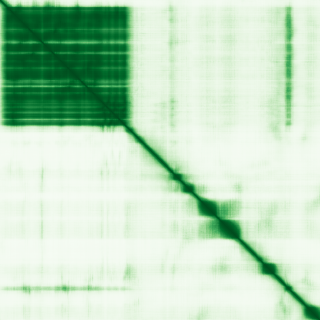
Mean pLDDT
69.0/ 100
Low
743 residues
Confidence breakdown
- Very high(≥ 90)34%
- Confident(70–90)23%
- Low(50–70)12%
- Very low(< 50)31%
Open interactive 3D viewer
AlphaFold (Jumper et al., 2021) · CC BY 4.0
dystrobrevin alpha
Annotations refreshed 2 months ago.
Diagnostic Grade (Green)
Congenital muscular dystrophy
MONOALLELIC, autosomal or pseudoautosomal, NOT imprintedFamilial Meniere Disease
MONOALLELIC, autosomal or pseudoautosomal, NOT imprintedFetal anomalies
MONOALLELIC, autosomal or pseudoautosomal, NOT imprintedHereditary neuropathy
Hereditary neuropathy or pain disorder
Left Ventricular Noncompaction Cardiomyopathy
MONOALLELIC, autosomal or pseudoautosomal, imprinted status unknownPaediatric or syndromic cardiomyopathy
MONOALLELIC, autosomal or pseudoautosomal, NOT imprintedmyopathy with myalgia, increased serum creatine kinase, and with or without episodic rhabdomyolysis 1
mathematical ability
atrial fibrillation
muscular dystrophy
alcohol drinking
dilated cardiomyopathy
Meniere disease
non-neoplastic nevus
hamartoma
nevus
Score is the Open Targets composite evidence score (0-1). Higher = stronger gene-disease association.
Dystrobrevin alpha
May be involved in the formation and stability of synapses as well as being involved in the clustering of nicotinic acetylcholine receptors
DTNA · Q9Y4J8
Mean pLDDT
69.0/ 100
Low
743 residues
Confidence breakdown
AlphaFold (Jumper et al., 2021) · CC BY 4.0