
AlphaFold predicted structure
DVL1 · O14640
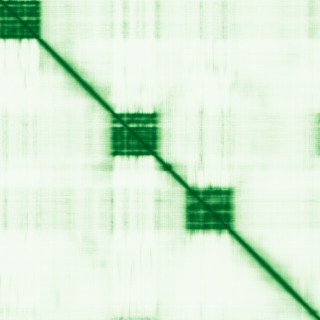
Mean pLDDT
59.8/ 100
Low
695 residues
Confidence breakdown
- Very high(≥ 90)18%
- Confident(70–90)20%
- Low(50–70)7%
- Very low(< 50)56%
Open interactive 3D viewer
AlphaFold (Jumper et al., 2021) · CC BY 4.0
dishevelled segment polarity protein 1
Annotations refreshed 3 months ago.
Diagnostic Grade (Green)
Clefting
MONOALLELIC, autosomal or pseudoautosomal, imprinted status unknownDDG2P
MONOALLELIC, autosomal or pseudoautosomal, imprinted status unknownFetal anomalies
MONOALLELIC, autosomal or pseudoautosomal, imprinted status unknownLimb disorders
MONOALLELIC, autosomal or pseudoautosomal, NOT imprintedSkeletal dysplasia
MONOALLELIC, autosomal or pseudoautosomal, NOT imprintedIntellectual disability
MONOALLELIC, autosomal or pseudoautosomal, imprinted status unknownMonogenic hearing loss
autosomal dominant Robinow syndrome
Robinow syndrome
hereditary disease
ciliary dyskinesia, primary, 40
neoplasm
breast carcinoma
hepatocellular carcinoma
breast cancer
cancer
non-small cell lung carcinoma
Score is the Open Targets composite evidence score (0-1). Higher = stronger gene-disease association.
Segment polarity protein dishevelled homolog DVL-1
Participates in Wnt signaling by binding to the cytoplasmic C-terminus of frizzled family members and transducing the Wnt signal to down-stream effectors. Plays a role both in canonical and non-canonical Wnt signaling. Plays a role in the signal transduction pathways mediated by multiple Wnt genes. Required for LEF1 activation upon WNT1 and WNT3A signaling. DVL1 and PAK1 form a ternary complex with MUSK which is important for MUSK-dependent regulation of AChR clustering during the formation of the neuromuscular junction (NMJ)
DVL1 · O14640
Mean pLDDT
59.8/ 100
Low
695 residues
Confidence breakdown
AlphaFold (Jumper et al., 2021) · CC BY 4.0