
AlphaFold predicted structure
EARS2 · Q5JPH6
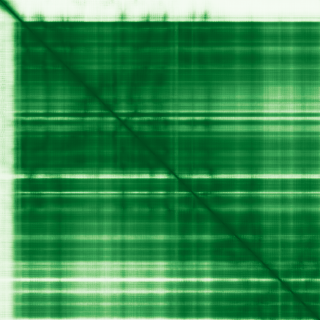
Mean pLDDT
89.4/ 100
Confident
523 residues
Confidence breakdown
- Very high(≥ 90)78%
- Confident(70–90)13%
- Low(50–70)4%
- Very low(< 50)5%
Open interactive 3D viewer
AlphaFold (Jumper et al., 2021) · CC BY 4.0
glutamyl-tRNA synthetase 2, mitochondrial
Annotations refreshed 3 months ago.
Diagnostic Grade (Green)
Early onset or syndromic epilepsy
BIALLELIC, autosomal or pseudoautosomalFetal anomalies
BIALLELIC, autosomal or pseudoautosomalInherited white matter disorders
BIALLELIC, autosomal or pseudoautosomalIntellectual disability
BIALLELIC, autosomal or pseudoautosomalLikely inborn error of metabolism
BIALLELIC, autosomal or pseudoautosomalMitochondrial disorders
BIALLELIC, autosomal or pseudoautosomalPossible mitochondrial disorder - nuclear genes
BIALLELIC, autosomal or pseudoautosomalUndiagnosed metabolic disorders
BIALLELIC, autosomal or pseudoautosomal+6 more panels — install the extension to see the full list inline on any page.
Leukoencephalopathy - thalamus and brainstem anomalies - high lactate
leukoencephalopathy-thalamus and brainstem anomalies-high lactate syndrome
hereditary disease
mitochondrial disease
inborn mitochondrial metabolism disorder
Leigh syndrome
epilepsy
Global developmental delay
Limb tremor
Abnormal facial shape
Score is the Open Targets composite evidence score (0-1). Higher = stronger gene-disease association.
Nondiscriminating glutamyl-tRNA synthetase EARS2, mitochondrial
Non-discriminating glutamyl-tRNA synthetase that catalyzes aminoacylation of both mitochondrial tRNA(Glu) and tRNA(Gln) and participates in RNA aminoacylation for mitochondrial protein translation (PubMed:19805282). Attachs glutamate to tRNA(Glu) or tRNA(Gln) in a two-step reaction: glutamate is first activated by ATP to form Glu-AMP and then transferred to the acceptor end of tRNA(Glu) or tRNA(Gln) (PubMed:19805282). In vitro, cytoplasmic tRNA(Gln) is slightly glutamylated, but with low activity (PubMed:19805282)
EARS2 · Q5JPH6
Mean pLDDT
89.4/ 100
Confident
523 residues
Confidence breakdown
AlphaFold (Jumper et al., 2021) · CC BY 4.0