
AlphaFold predicted structure
ECHS1 · P30084
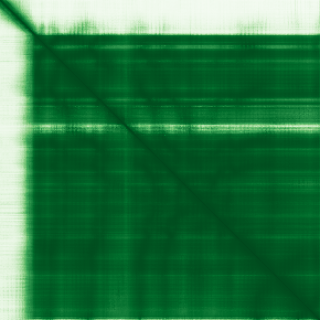
Mean pLDDT
91.7/ 100
Very high
290 residues
Confidence breakdown
- Very high(≥ 90)86%
- Confident(70–90)4%
- Low(50–70)2%
- Very low(< 50)9%
Open interactive 3D viewer
AlphaFold (Jumper et al., 2021) · CC BY 4.0
enoyl-CoA hydratase, short chain 1
Annotations refreshed 3 months ago.
Diagnostic Grade (Green)
Childhood onset dystonia, chorea or related movement disorder
BIALLELIC, autosomal or pseudoautosomalDDG2P
BIALLELIC, autosomal or pseudoautosomalFetal anomalies
BIALLELIC, autosomal or pseudoautosomalLikely inborn error of metabolism
BIALLELIC, autosomal or pseudoautosomalMitochondrial disorders
BIALLELIC, autosomal or pseudoautosomalPossible mitochondrial disorder - nuclear genes
BIALLELIC, autosomal or pseudoautosomalPyruvate dehydrogenase (PDH) deficiency
BIALLELIC, autosomal or pseudoautosomalUndiagnosed metabolic disorders
BIALLELIC, autosomal or pseudoautosomalmitochondrial short-chain Enoyl-Coa hydratase 1 deficiency
Leigh syndrome
hereditary disease
neurodegenerative disease
colorectal carcinoma
neoplasm
gastric cancer
cancer
familial digital arthropathy-brachydactyly
Blount disease
Score is the Open Targets composite evidence score (0-1). Higher = stronger gene-disease association.
Enoyl-CoA hydratase, mitochondrial
Converts unsaturated trans-2-enoyl-CoA species ((2E)-enoyl-CoA) to the corresponding (3S)-3hydroxyacyl-CoA species through addition of a water molecule to the double bond (PubMed:25125611, PubMed:26251176). Catalyzes the hydration of medium- and short-chained fatty enoyl-CoA thioesters from 4 carbons long (C4) up to C16 (PubMed:26251176). Has high substrate specificity for crotonyl-CoA ((2E)-butenoyl-CoA) and moderate specificity for acryloyl-CoA, 3-methylcrotonyl-CoA (3-methyl-(2E)-butenoyl-CoA) and methacrylyl-CoA ((2E)-2-methylpropenoyl-CoA) (PubMed:26251176). Can bind tiglyl-CoA (2-methylcrotonoyl-CoA), but hydrates only a small amount of this substrate (PubMed:26251176). Plays a key role in the beta-oxidation spiral of short- and medium-chain fatty acid oxidation (PubMed:25125611, PubMed:26251176). At a lower rate than the hydratase reaction, catalyzes the isomerase reaction of trans-3-enoyl-CoA species (such as (3E)-hexenoyl-CoA) to trans-2-enoyl-CoA species (such as (2E)-hexenoyl-CoA), which are subsequently hydrated to 3(S)-3-hydroxyacyl-CoA species (such as (3S)-hydroxyhexanoyl-CoA) (By similarity)
Curated MONDO disease pages that list ECHS1 among their top associated genes.
ECHS1 · P30084
Mean pLDDT
91.7/ 100
Very high
290 residues
Confidence breakdown
AlphaFold (Jumper et al., 2021) · CC BY 4.0