
AlphaFold predicted structure
EDAR · Q9UNE0
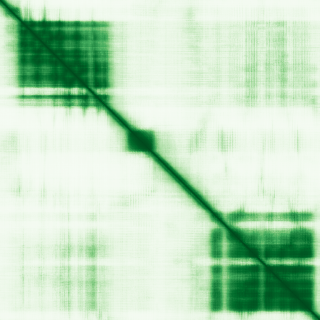
Mean pLDDT
66.6/ 100
Low
448 residues
Confidence breakdown
- Very high(≥ 90)14%
- Confident(70–90)38%
- Low(50–70)14%
- Very low(< 50)33%
Open interactive 3D viewer
AlphaFold (Jumper et al., 2021) · CC BY 4.0
ectodysplasin A receptor
Annotations refreshed 2 months ago.
Diagnostic Grade (Green)
DDG2P
BOTH monoallelic and biallelic, autosomal or pseudoautosomalEctodermal dysplasia
BOTH monoallelic and biallelic (but BIALLELIC mutations cause a more SEVERE disease form), autosomal or pseudoautosomalEctodermal dysplasia without a known gene mutation
BOTH monoallelic and biallelic (but BIALLELIC mutations cause a more SEVERE disease form), autosomal or pseudoautosomalFetal anomalies
Unknownautosomal recessive hypohidrotic ectodermal dysplasia
hypohidrotic ectodermal dysplasia
ectodermal dysplasia 10A, hypohidrotic/hair/nail type, autosomal dominant
autosomal dominant hypohidrotic ectodermal dysplasia
Oligodontia
ectodermal dysplasia syndrome
hereditary disease
mitochondrial DNA depletion syndrome 4a
Alpers syndrome
mitochondrial neurogastrointestinal encephalomyopathy
Score is the Open Targets composite evidence score (0-1). Higher = stronger gene-disease association.
Tumor necrosis factor receptor superfamily member EDAR
Receptor for EDA isoform A1, but not for EDA isoform A2. Mediates the activation of NF-kappa-B and JNK. May promote caspase-independent cell death
EDAR · Q9UNE0
Mean pLDDT
66.6/ 100
Low
448 residues
Confidence breakdown
AlphaFold (Jumper et al., 2021) · CC BY 4.0