
AlphaFold predicted structure
EED · O75530
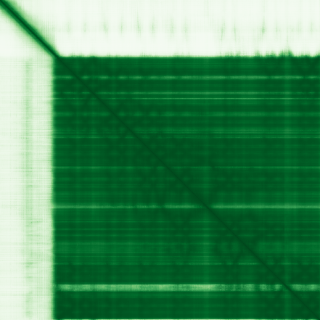
Mean pLDDT
86.5/ 100
Confident
441 residues
Confidence breakdown
- Very high(≥ 90)79%
- Confident(70–90)3%
- Low(50–70)1%
- Very low(< 50)17%
Open interactive 3D viewer
AlphaFold (Jumper et al., 2021) · CC BY 4.0
embryonic ectoderm development
Annotations refreshed 3 months ago.
Diagnostic Grade (Green)
Beckwith-Wiedemann syndrome (BWS) and other congenital overgrowth disorders
MONOALLELIC, autosomal or pseudoautosomal, NOT imprintedDDG2P
MONOALLELIC, autosomal or pseudoautosomal, imprinted status unknownFetal anomalies
MONOALLELIC, autosomal or pseudoautosomal, imprinted status unknownIntellectual disability
MONOALLELIC, autosomal or pseudoautosomal, NOT imprintedSkeletal dysplasia
MONOALLELIC, autosomal or pseudoautosomal, NOT imprintedBilateral congenital or childhood onset cataracts
MONOALLELIC, autosomal or pseudoautosomal, NOT imprintedCohen-Gibson syndrome
viral infectious disease
smoking initiation
melanoma
breast carcinoma
cancer
Alzheimer disease
smoking behavior
attention deficit-hyperactivity disorder
substance abuse
Score is the Open Targets composite evidence score (0-1). Higher = stronger gene-disease association.
Polycomb protein EED
Polycomb group (PcG) protein. Component of the PRC2/EED-EZH2 complex, which methylates 'Lys-9' and 'Lys-27' of histone H3, leading to transcriptional repression of the affected target gene. Also recognizes 'Lys-26' trimethylated histone H1 with the effect of inhibiting PRC2 complex methyltransferase activity on nucleosomal histone H3 'Lys-27', whereas H3 'Lys-27' recognition has the opposite effect, enabling the propagation of this repressive mark. The PRC2/EED-EZH2 complex may also serve as a recruiting platform for DNA methyltransferases, thereby linking two epigenetic repression systems. Genes repressed by the PRC2/EED-EZH2 complex include HOXC8, HOXA9, MYT1 and CDKN2A
Curated MONDO disease pages that list EED among their top associated genes.
EED · O75530
Mean pLDDT
86.5/ 100
Confident
441 residues
Confidence breakdown
AlphaFold (Jumper et al., 2021) · CC BY 4.0