AlphaFold predicted structure
EEFSEC · P57772
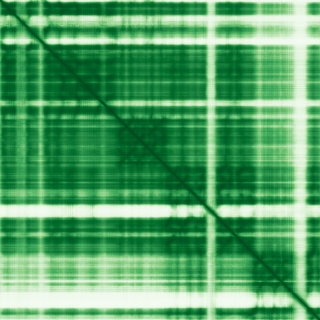
Mean pLDDT
79.8/ 100
Confident
596 residues
Confidence breakdown
- Very high(≥ 90)28%
- Confident(70–90)53%
- Low(50–70)9%
- Very low(< 50)9%
AlphaFold (Jumper et al., 2021) · CC BY 4.0
eukaryotic elongation factor, selenocysteine-tRNA specific
Annotations refreshed 9 hours ago.
Diagnostic Grade (Green)
Ataxia and cerebellar anomalies - narrow panel
BIALLELIC, autosomal or pseudoautosomalEarly onset or syndromic epilepsy
BIALLELIC, autosomal or pseudoautosomalFetal anomalies
BIALLELIC, autosomal or pseudoautosomalIntellectual disability
BIALLELIC, autosomal or pseudoautosomalneurodevelopmental disorder with progressive spasticity and brain abnormalities
neurodegenerative disease
prostate carcinoma
asthma
prostate cancer
chronic obstructive pulmonary disease
atrial fibrillation
urolithiasis
alcohol drinking
female genital tract polyp
Score is the Open Targets composite evidence score (0-1). Higher = stronger gene-disease association.
Selenocysteine-specific elongation factor
Translation factor required for the incorporation of the rare amino acid selenocysteine encoded by UGA codons (PubMed:27708257, PubMed:35709277). Replaces the eRF1-eRF3-GTP ternary complex for the insertion of selenocysteine directed by the UGA codon (PubMed:27708257, PubMed:35709277). Insertion of selenocysteine at UGA codons is mediated by SECISBP2 and EEFSEC: SECISBP2 (1) specifically binds the SECIS sequence once the 80S ribosome encounters an in-frame UGA codon and (2) contacts the RPS27A/eS31 of the 40S ribosome before ribosome stalling (PubMed:35709277). (3) GTP-bound EEFSEC then delivers selenocysteinyl-tRNA(Sec) to the 80S ribosome and adopts a preaccommodated state conformation (PubMed:35709277). (4) After GTP hydrolysis, EEFSEC dissociates from the assembly, selenocysteinyl-tRNA(Sec) accommodates, and peptide bond synthesis and selenoprotein elongation occur (PubMed:35709277)
EEFSEC · P57772

Mean pLDDT
79.8/ 100
Confident
596 residues
Confidence breakdown
AlphaFold (Jumper et al., 2021) · CC BY 4.0