AlphaFold predicted structure
EFNB1 · P98172
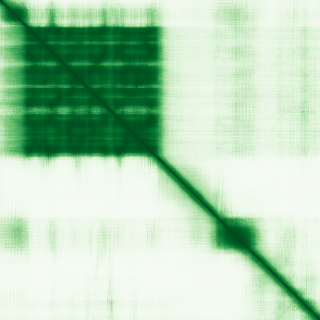
Mean pLDDT
70.7/ 100
Confident
346 residues
Confidence breakdown
- Very high(≥ 90)35%
- Confident(70–90)19%
- Low(50–70)15%
- Very low(< 50)32%
AlphaFold (Jumper et al., 2021) · CC BY 4.0
ephrin B1
Annotations refreshed 10 hours ago.
Diagnostic Grade (Green)
Clefting
X-LINKED: hemizygous mutation in males, monoallelic mutations in females may cause disease (may be less severe, later onset than males)Common craniosynostosis syndromes
X-LINKED: hemizygous mutation in males, monoallelic mutations in females may cause disease (may be less severe, later onset than males)DDG2P
X-LINKED: hemizygous mutation in males, monoallelic mutations in females may cause disease (may be less severe, later onset than males)Fetal anomalies
X-LINKED: hemizygous mutation in males, monoallelic mutations in females may cause disease (may be less severe, later onset than males)Rare syndromic craniosynostosis or isolated multisuture synostosis
X-LINKED: hemizygous mutation in males, monoallelic mutations in females may cause disease (may be less severe, later onset than males)Intellectual disability
X-LINKED: hemizygous mutation in males, monoallelic mutations in females may cause disease (may be less severe, later onset than males)Limb disorders
X-LINKED: hemizygous mutation in males, monoallelic mutations in females may cause disease (may be less severe, later onset than males)Skeletal dysplasia
X-LINKED: hemizygous mutation in males, monoallelic mutations in females may cause disease (may be less severe, later onset than males)craniofrontonasal syndrome
Craniofrontonasal dysplasia
hereditary disease
type 2 diabetes mellitus
diabetes mellitus
schizencephaly
amelogenesis imperfecta
familial congenital mirror movements
mirror movements 1
cancer
Score is the Open Targets composite evidence score (0-1). Higher = stronger gene-disease association.
Ephrin-B1
Cell surface transmembrane ligand for Eph receptors, a family of receptor tyrosine kinases which are crucial for migration, repulsion and adhesion during neuronal, vascular and epithelial development (PubMed:7973638, PubMed:8070404). Binding to Eph receptors residing on adjacent cells leads to contact-dependent bidirectional signaling into neighboring cells (PubMed:7973638, PubMed:8070404). Shows high affinity for the receptor tyrosine kinase EPHB1/ELK (PubMed:7973638, PubMed:8070404). Can also bind EPHB2 and EPHB3 (PubMed:8070404). Binds to, and induces collapse of, commissural axons/growth cones in vitro (By similarity). May play a role in constraining the orientation of longitudinally projecting axons (By similarity)
EFNB1 · P98172

Mean pLDDT
70.7/ 100
Confident
346 residues
Confidence breakdown
AlphaFold (Jumper et al., 2021) · CC BY 4.0