AlphaFold predicted structure
EGLN1 · Q9GZT9
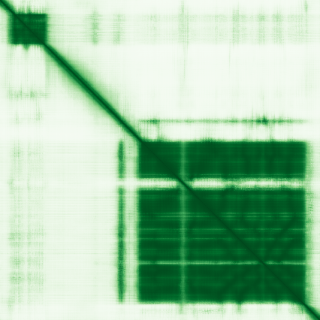
Mean pLDDT
71.9/ 100
Confident
426 residues
Confidence breakdown
- Very high(≥ 90)47%
- Confident(70–90)11%
- Low(50–70)7%
- Very low(< 50)35%
AlphaFold (Jumper et al., 2021) · CC BY 4.0
egl-9 family hypoxia inducible factor 1
Annotations refreshed 9 hours ago.
Diagnostic Grade (Green)
Hereditary Erythrocytosis
MONOALLELIC, autosomal or pseudoautosomal, NOT imprintederythrocytosis, familial, 3
anemia
anemia (phenotype)
chronic kidney disease
neurodegenerative disease
autosomal dominant secondary polycythemia
chronic renal failure syndrome
stage 5 chronic kidney disease
kidney disorder
aplastic anemia
Score is the Open Targets composite evidence score (0-1). Higher = stronger gene-disease association.
Egl nine homolog 1
Cellular oxygen sensor that catalyzes, under normoxic conditions, the post-translational formation of 4-hydroxyproline in hypoxia-inducible factor (HIF) alpha proteins. Hydroxylates a specific proline found in each of the oxygen-dependent degradation (ODD) domains (N-terminal, NODD, and C-terminal, CODD) of HIF1A. Also hydroxylates HIF2A. Has a preference for the CODD site for both HIF1A and HIF1B. Hydroxylated HIFs are then targeted for proteasomal degradation via the von Hippel-Lindau ubiquitination complex. Under hypoxic conditions, the hydroxylation reaction is attenuated allowing HIFs to escape degradation resulting in their translocation to the nucleus, heterodimerization with HIF1B, and increased expression of hypoxy-inducible genes. EGLN1 is the most important isozyme under normoxia and, through regulating the stability of HIF1, involved in various hypoxia-influenced processes such as angiogenesis in retinal and cardiac functionality. Target proteins are preferentially recognized via a LXXLAP motif
EGLN1 · Q9GZT9

Mean pLDDT
71.9/ 100
Confident
426 residues
Confidence breakdown
AlphaFold (Jumper et al., 2021) · CC BY 4.0