
AlphaFold predicted structure
EHHADH · Q08426
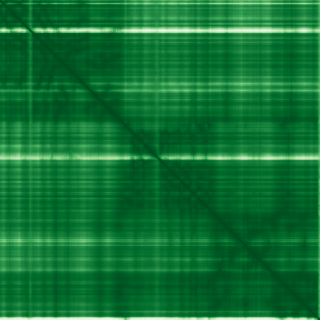
Mean pLDDT
95.0/ 100
Very high
723 residues
Confidence breakdown
- Very high(≥ 90)93%
- Confident(70–90)4%
- Low(50–70)2%
- Very low(< 50)1%
Open interactive 3D viewer
AlphaFold (Jumper et al., 2021) · CC BY 4.0
enoyl-CoA hydratase and 3-hydroxyacyl CoA dehydrogenase
Annotations refreshed 2 months ago.
Moderate Evidence (Amber)
Likely inborn error of metabolism
MONOALLELIC, autosomal or pseudoautosomal, imprinted status unknownRenal tubulopathies
MONOALLELIC, autosomal or pseudoautosomal, NOT imprintedNeonatal cholestasis
MONOALLELIC, autosomal or pseudoautosomal, imprinted status unknownprimary Fanconi syndrome
Fanconi renotubular syndrome 1
d-bifunctional protein deficiency
insomnia
cardiac arrest
metabolic acidosis
diabetes mellitus
chronic kidney disease
type 2 diabetes mellitus
hepatocellular carcinoma
Score is the Open Targets composite evidence score (0-1). Higher = stronger gene-disease association.
Peroxisomal bifunctional enzyme
Peroxisomal trifunctional enzyme possessing 2-enoyl-CoA hydratase, 3-hydroxyacyl-CoA dehydrogenase, and delta 3, delta 2-enoyl-CoA isomerase activities. Catalyzes two of the four reactions of the long chain fatty acids peroxisomal beta-oxidation pathway (By similarity). Can also use branched-chain fatty acids such as 2-methyl-2E-butenoyl-CoA as a substrate, which is hydrated into (2S,3S)-3-hydroxy-2-methylbutanoyl-CoA (By similarity). Optimal isomerase for 2,5 double bonds into 3,5 form isomerization in a range of enoyl-CoA species (Probable). Also able to isomerize both 3-cis and 3-trans double bonds into the 2-trans form in a range of enoyl-CoA species (By similarity). With HSD17B4, catalyzes the hydration of trans-2-enoyl-CoA and the dehydrogenation of 3-hydroxyacyl-CoA, but with opposite chiral specificity (PubMed:15060085). Regulates the amount of medium-chain dicarboxylic fatty acids which are essential regulators of all fatty acid oxidation pathways (By similarity). Also involved in the degradation of long-chain dicarboxylic acids through peroxisomal beta-oxidation (PubMed:15060085)
EHHADH · Q08426
Mean pLDDT
95.0/ 100
Very high
723 residues
Confidence breakdown
AlphaFold (Jumper et al., 2021) · CC BY 4.0