
AlphaFold predicted structure
EIF2AK3 · Q9NZJ5
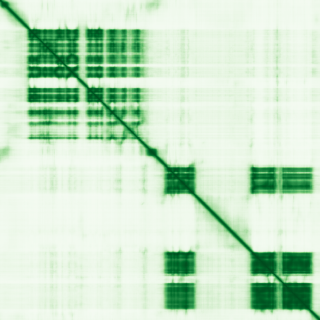
Mean pLDDT
59.1/ 100
Low
1,116 residues
Confidence breakdown
- Very high(≥ 90)16%
- Confident(70–90)26%
- Low(50–70)12%
- Very low(< 50)47%
Open interactive 3D viewer
AlphaFold (Jumper et al., 2021) · CC BY 4.0
eukaryotic translation initiation factor 2 alpha kinase 3
Annotations refreshed 2 months ago.
Diagnostic Grade (Green)
DDG2P
BIALLELIC, autosomal or pseudoautosomalDiabetes with additional phenotypes suggestive of a monogenic aetiology
BIALLELIC, autosomal or pseudoautosomalFamilial diabetes
BIALLELIC, autosomal or pseudoautosomalFetal anomalies
BIALLELIC, autosomal or pseudoautosomalIntellectual disability
BIALLELIC, autosomal or pseudoautosomalNeonatal diabetes
BIALLELIC, autosomal or pseudoautosomalSkeletal dysplasia
BIALLELIC, autosomal or pseudoautosomalMultiple Epiphyseal Dysplasia
BIALLELIC, autosomal or pseudoautosomal+3 more panels — install the extension to see the full list inline on any page.
Wolcott-Rallison syndrome
cancer
neurodegenerative disease
Menkes disease
progressive supranuclear palsy
uterine corpus leiomyoma
sialolithiasis
autoimmune disorder of central nervous system
hereditary disease
liver disorder
Score is the Open Targets composite evidence score (0-1). Higher = stronger gene-disease association.
Eukaryotic translation initiation factor 2-alpha kinase 3
Metabolic-stress sensing protein kinase that phosphorylates the alpha subunit of eukaryotic translation initiation factor 2 (EIF2S1/eIF-2-alpha) in response to various stress, such as unfolded protein response (UPR) (PubMed:10026192, PubMed:10677345, PubMed:11907036, PubMed:12086964, PubMed:25925385, PubMed:31023583). Key effector of the integrated stress response (ISR) to unfolded proteins: EIF2AK3/PERK specifically recognizes and binds misfolded proteins, leading to its activation and EIF2S1/eIF-2-alpha phosphorylation (PubMed:10677345, PubMed:27917829, PubMed:31023583). EIF2S1/eIF-2-alpha phosphorylation in response to stress converts EIF2S1/eIF-2-alpha in a global protein synthesis inhibitor, leading to a global attenuation of cap-dependent translation, while concomitantly initiating the preferential translation of ISR-specific mRNAs, such as the transcriptional activators ATF4 and QRICH1, and hence allowing ATF4- and QRICH1-mediated reprogramming (PubMed:10026192, PubMed:10677345, PubMed:31023583, PubMed:33384352). The EIF2AK3/PERK-mediated unfolded protein response increases mitochondrial oxidative phosphorylation by promoting ATF4-mediated expression of COX7A2L/SCAF1, thereby increasing formation of respiratory chain supercomplexes (PubMed:31023583). In contrast to most subcellular compartments, mitochondria are protected from the EIF2AK3/PERK-mediated unfolded protein response due to EIF2AK3/PERK inhibition by ATAD3A at mitochondria-endoplasmic reticulum contact sites (PubMed:39116259). In addition to EIF2S1/eIF-2-alpha, also phosphorylates NFE2L2/NRF2 in response to stress, promoting release of NFE2L2/NRF2 from the BCR(KEAP1) complex, leading to nuclear accumulation and activation of NFE2L2/NRF2 (By similarity). Serves as a critical effector of unfolded protein response (UPR)-induced G1 growth arrest due to the loss of cyclin-D1 (CCND1) (By similarity). Involved in control of mitochondrial morphology and function (By similarity)
EIF2AK3 · Q9NZJ5
Mean pLDDT
59.1/ 100
Low
1,116 residues
Confidence breakdown
AlphaFold (Jumper et al., 2021) · CC BY 4.0