
AlphaFold predicted structure
EIF3M · Q7L2H7
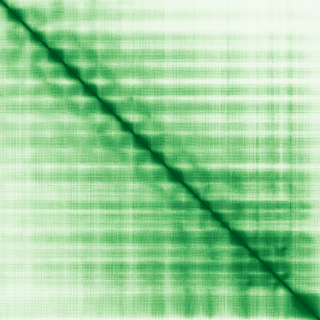
Mean pLDDT
55.3/ 100
Low
374 residues
Confidence breakdown
- Very high(≥ 90)0%
- Confident(70–90)6%
- Low(50–70)71%
- Very low(< 50)23%
Open interactive 3D viewer
AlphaFold (Jumper et al., 2021) · CC BY 4.0
eukaryotic translation initiation factor 3 subunit M
Annotations refreshed 3 months ago.
Moderate Evidence (Amber)
COVID-19 research
Unknownhypothyroidism
major depressive disorder
digestive system disorder
coronary atherosclerosis
Hernia
atrial fibrillation
Hernia of the abdominal wall
metabolic syndrome
smoking initiation
diaphragmatic hernia
Score is the Open Targets composite evidence score (0-1). Higher = stronger gene-disease association.
Eukaryotic translation initiation factor 3 subunit M
Component of the eukaryotic translation initiation factor 3 (eIF-3) complex, which is required for several steps in the initiation of protein synthesis (PubMed:17403899, PubMed:25849773, PubMed:27462815). The eIF-3 complex associates with the 40S ribosome and facilitates the recruitment of eIF-1, eIF-1A, eIF-2:GTP:methionyl-tRNAi and eIF-5 to form the 43S pre-initiation complex (43S PIC). The eIF-3 complex stimulates mRNA recruitment to the 43S PIC and scanning of the mRNA for AUG recognition. The eIF-3 complex is also required for disassembly and recycling of post-termination ribosomal complexes and subsequently prevents premature joining of the 40S and 60S ribosomal subunits prior to initiation (PubMed:17403899). The eIF-3 complex specifically targets and initiates translation of a subset of mRNAs involved in cell proliferation, including cell cycling, differentiation and apoptosis, and uses different modes of RNA stem-loop binding to exert either translational activation or repression (PubMed:25849773)
EIF3M · Q7L2H7
Mean pLDDT
55.3/ 100
Low
374 residues
Confidence breakdown
AlphaFold (Jumper et al., 2021) · CC BY 4.0