AlphaFold predicted structure
EIF4A2 · Q14240
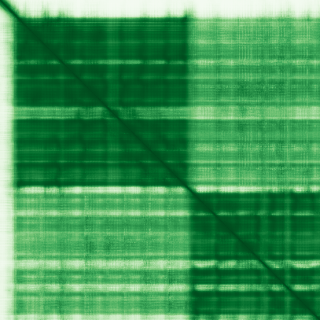
Mean pLDDT
86.4/ 100
Confident
407 residues
Confidence breakdown
- Very high(≥ 90)60%
- Confident(70–90)28%
- Low(50–70)7%
- Very low(< 50)5%
AlphaFold (Jumper et al., 2021) · CC BY 4.0
eukaryotic translation initiation factor 4A2
Annotations refreshed 1 month ago.
Diagnostic Grade (Green)
DDG2P
MONOALLELIC, autosomal or pseudoautosomal, imprinted status unknownEarly onset or syndromic epilepsy
BOTH monoallelic and biallelic, autosomal or pseudoautosomalFetal anomalies
BOTH monoallelic and biallelic, autosomal or pseudoautosomalIntellectual disability
BOTH monoallelic and biallelic, autosomal or pseudoautosomalneurodevelopmental disorder with hypotonia and speech delay, with or without seizures
neurodevelopmental disorder
hereditary disease
dengue disease
complex neurodevelopmental disorder
neurodegenerative disease
Neurodevelopmental delay
acute myeloid leukemia
breast carcinoma
esophageal squamous cell carcinoma
Score is the Open Targets composite evidence score (0-1). Higher = stronger gene-disease association.
Eukaryotic initiation factor 4A-II
ATP-dependent RNA helicase which is a subunit of the eIF4F complex involved in cap recognition and is required for mRNA binding to ribosome. In the current model of translation initiation, eIF4A unwinds RNA secondary structures in the 5'-UTR of mRNAs which is necessary to allow efficient binding of the small ribosomal subunit, and subsequent scanning for the initiator codon
Curated MONDO disease pages that list EIF4A2 among their top associated genes.
EIF4A2 · Q14240

Mean pLDDT
86.4/ 100
Confident
407 residues
Confidence breakdown
AlphaFold (Jumper et al., 2021) · CC BY 4.0