
AlphaFold predicted structure
EIF4G1 · Q04637
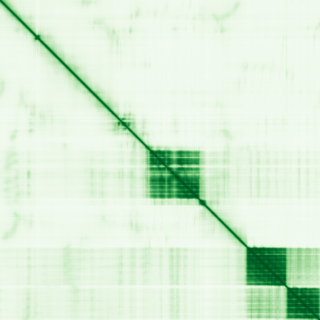
Mean pLDDT
55.0/ 100
Low
1,599 residues
Confidence breakdown
- Very high(≥ 90)12%
- Confident(70–90)24%
- Low(50–70)8%
- Very low(< 50)55%
Open interactive 3D viewer
AlphaFold (Jumper et al., 2021) · CC BY 4.0
eukaryotic translation initiation factor 4 gamma 1
Annotations refreshed 3 months ago.
Moderate Evidence (Amber)
Adult onset dystonia, chorea or related movement disorder
MONOALLELIC, autosomal or pseudoautosomal, imprinted status unknownAdult onset neurodegenerative disorder
MONOALLELIC, autosomal or pseudoautosomal, imprinted status unknownIntellectual disability
MONOALLELIC, autosomal or pseudoautosomal, imprinted status unknownParkinson Disease and Complex Parkinsonism
MONOALLELIC, autosomal or pseudoautosomal, imprinted status unknownHereditary late-onset Parkinson disease
neurodegenerative disease
dengue disease
Young adult-onset Parkinsonism
preeclampsia
late-onset Parkinson disease
Parkinson disease
non-small cell lung carcinoma
neoplasm
cancer
Score is the Open Targets composite evidence score (0-1). Higher = stronger gene-disease association.
Eukaryotic translation initiation factor 4 gamma 1
Component of the protein complex eIF4F, which is involved in the recognition of the mRNA cap, ATP-dependent unwinding of 5'-terminal secondary structure and recruitment of mRNA to the ribosome (PubMed:29987188). Exists in two complexes, either with EIF1 or with EIF4E (mutually exclusive) (PubMed:29987188). Together with EIF1, is required for leaky scanning, in particular for avoiding cap-proximal start codon (PubMed:29987188). Together with EIF4E, antagonizes the scanning promoted by EIF1-EIF4G1 and locates the start codon (through a TISU element) without scanning (PubMed:29987188). As a member of the eIF4F complex, required for endoplasmic reticulum stress-induced ATF4 mRNA translation (PubMed:29062139)
EIF4G1 · Q04637
Mean pLDDT
55.0/ 100
Low
1,599 residues
Confidence breakdown
AlphaFold (Jumper et al., 2021) · CC BY 4.0