
AlphaFold predicted structure
ELF4 · Q99607
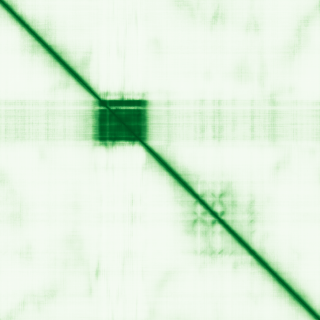
Mean pLDDT
48.7/ 100
Very low
663 residues
Confidence breakdown
- Very high(≥ 90)11%
- Confident(70–90)2%
- Low(50–70)12%
- Very low(< 50)75%
Open interactive 3D viewer
AlphaFold (Jumper et al., 2021) · CC BY 4.0
E74 like ETS transcription factor 4
Annotations refreshed 2 months ago.
Diagnostic Grade (Green)
Autoinflammatory disorders
X-LINKED: hemizygous mutation in males, monoallelic mutations in females may cause disease (may be less severe, later onset than males)Primary immunodeficiency or monogenic inflammatory bowel disease
X-LINKED: hemizygous mutation in males, monoallelic mutations in females may cause disease (may be less severe, later onset than males)COVID-19 research
Unknownautoinflammatory syndrome, familial, X-linked, Behcet-like 2
neurodegenerative disease
gliomatosis cerebri
carcinoma of liver and intrahepatic biliary tract
skin basal cell carcinoma
breast ductal adenocarcinoma
short stature due to isolated growth hormone deficiency with X-linked hypogammaglobulinemia
endometrial endometrioid adenocarcinoma
ovarian endometrioid adenocarcinoma with squamous differentiation
acute myeloid leukemia
Score is the Open Targets composite evidence score (0-1). Higher = stronger gene-disease association.
ETS-related transcription factor Elf-4
Transcriptional activator that binds to DNA sequences containing the consensus 5'-WGGA-3'. Transactivates promoters of the hematopoietic growth factor genes CSF2, IL3, IL8, and of the bovine lysozyme gene. Acts synergistically with RUNX1 to transactivate the IL3 promoter (By similarity). Transactivates the PRF1 promoter in natural killer (NK) cells and CD8+ T cells (PubMed:34326534). Plays a role in the development and function of NK and NK T-cells and in innate immunity. Controls the proliferation and homing of CD8+ T-cells via the Kruppel-like factors KLF4 and KLF2 (By similarity). Controls cell senescence in a p53-dependent manner. Can also promote cellular transformation through inhibition of the p16 pathway. Is a transcriptional regulator of inflammation, controlling T-helper 17 (Th17) cells and macrophage inflammatory responses. Required for sustained transcription of anti-inflammatory genes, including IL1RN (PubMed:34326534, PubMed:35266071). Is a negative regulator of pro-inflammatory cytokines expression including IL17A, IL1B, IL6, TNFA and CXCL1 (PubMed:34326534, PubMed:35266071). Down-regulates expression of TREM1, a cell surface receptor involved in the amplification of inflammatory responses (By similarity) (PubMed:34326534, PubMed:35266071)
ELF4 · Q99607
Mean pLDDT
48.7/ 100
Very low
663 residues
Confidence breakdown
AlphaFold (Jumper et al., 2021) · CC BY 4.0