
AlphaFold predicted structure
EMC1 · Q8N766
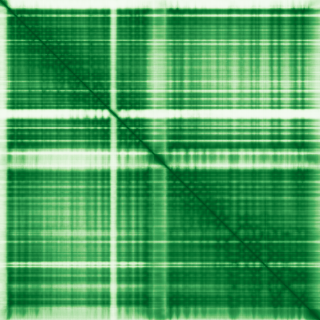
Mean pLDDT
87.4/ 100
Confident
993 residues
Confidence breakdown
- Very high(≥ 90)67%
- Confident(70–90)22%
- Low(50–70)8%
- Very low(< 50)3%
Open interactive 3D viewer
AlphaFold (Jumper et al., 2021) · CC BY 4.0
ER membrane protein complex subunit 1
Annotations refreshed 2 months ago.
Diagnostic Grade (Green)
DDG2P
BIALLELIC, autosomal or pseudoautosomalIntellectual disability
BOTH monoallelic and biallelic, autosomal or pseudoautosomalFetal anomalies
BIALLELIC, autosomal or pseudoautosomalRetinal disorders
cerebellar atrophy, visual impairment, and psychomotor retardation;
hereditary disease
Retinal dystrophy
Global developmental delay
Cerebellar atrophy
global developmental delay-visual anomalies-progressive cerebellar atrophy-truncal hypotonia syndrome
autosomal recessive retinitis pigmentosa
congenital anomaly of kidney and urinary tract
Obesity
complex neurodevelopmental disorder with motor features
Score is the Open Targets composite evidence score (0-1). Higher = stronger gene-disease association.
ER membrane protein complex subunit 1
Part of the endoplasmic reticulum membrane protein complex (EMC) that enables the energy-independent insertion into endoplasmic reticulum membranes of newly synthesized membrane proteins (PubMed:29242231, PubMed:29809151, PubMed:30415835, PubMed:32439656, PubMed:32459176). Preferentially accommodates proteins with transmembrane domains that are weakly hydrophobic or contain destabilizing features such as charged and aromatic residues (PubMed:29242231, PubMed:29809151, PubMed:30415835). Involved in the cotranslational insertion of multi-pass membrane proteins in which stop-transfer membrane-anchor sequences become ER membrane spanning helices (PubMed:29809151, PubMed:30415835). It is also required for the post-translational insertion of tail-anchored/TA proteins in endoplasmic reticulum membranes (PubMed:29242231, PubMed:29809151). By mediating the proper cotranslational insertion of N-terminal transmembrane domains in an N-exo topology, with translocated N-terminus in the lumen of the ER, controls the topology of multi-pass membrane proteins like the G protein-coupled receptors (PubMed:30415835). By regulating the insertion of various proteins in membranes, it is indirectly involved in many cellular processes (Probable)
EMC1 · Q8N766
Mean pLDDT
87.4/ 100
Confident
993 residues
Confidence breakdown
AlphaFold (Jumper et al., 2021) · CC BY 4.0