Skip to content
GenoLensGenoLens

EPG5

Chr 18q12.3-q21.1

ectopic P-granules 5 autophagy tethering factor

Aliases:
hEPG5
MANE:
ENST00000282041.11

Annotations refreshed 1 month ago.

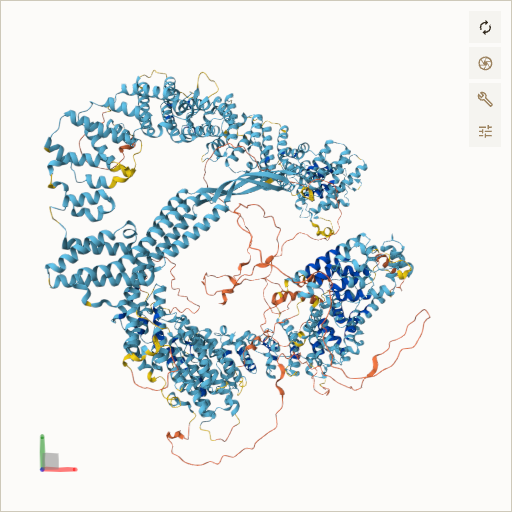
Predicted protein structure

Clinical relevance (Genomics England PanelApp)

Diagnostic Grade (Green)

  • Clefting

    BIALLELIC, autosomal or pseudoautosomal
  • Congenital myopathy

    BIALLELIC, autosomal or pseudoautosomal
  • COVID-19 research

    BIALLELIC, autosomal or pseudoautosomal
  • DDG2P

    BIALLELIC, autosomal or pseudoautosomal
  • Dilated Cardiomyopathy and conduction defects

    BIALLELIC, autosomal or pseudoautosomal
  • Early onset or syndromic epilepsy

    BIALLELIC, autosomal or pseudoautosomal
  • Fetal anomalies

    BIALLELIC, autosomal or pseudoautosomal
  • Intellectual disability

    BIALLELIC, autosomal or pseudoautosomal

+7 more panels — install the extension to see the full list inline on any page.

Disease associations (Open Targets)

  • Vici syndrome

    0.85
  • neurodegenerative disease

    0.53
  • hereditary disease

    0.52
  • syndromic retinitis pigmentosa

    0.40
  • cardiomyopathy

    0.26
  • liver disorder

    0.26
  • celiac disease

    0.25
  • paralytic strabismus

    0.24
  • microcephaly

    0.16
  • Global developmental delay

    0.11

Score is the Open Targets composite evidence score (0-1). Higher = stronger gene-disease association.

Protein function (UniProt)

Ectopic P granules protein 5 homolog

Involved in autophagy. May play a role in a late step of autophagy, such as clearance of autophagosomal cargo. Plays a key role in innate and adaptive immune response triggered by unmethylated cytidine-phosphate-guanosine (CpG) dinucleotides from pathogens, and mediated by the nucleotide-sensing receptor TLR9. It is necessary for the translocation of CpG dinucleotides from early endosomes to late endosomes and lysosomes, where TLR9 is located (PubMed:29130391)

Data sources: HGNC (CC BY 4.0), AlphaFold (CC BY 4.0, Jumper et al. Nature 2021), Genomics England PanelApp (CC BY 4.0), ClinGen, Open Targets (CC0), UniProt.

Not for sole clinical decision-making. Always verify against primary sources.