AlphaFold predicted structure
EPHA7 · Q15375
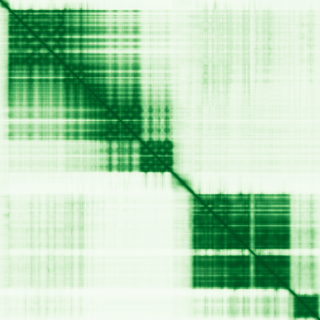
Mean pLDDT
81.9/ 100
Confident
998 residues
Confidence breakdown
- Very high(≥ 90)50%
- Confident(70–90)32%
- Low(50–70)7%
- Very low(< 50)11%
AlphaFold (Jumper et al., 2021) · CC BY 4.0
EPH receptor A7
Annotations refreshed 10 hours ago.
Moderate Evidence (Amber)
Intellectual disability
MONOALLELIC, autosomal or pseudoautosomal, imprinted status unknownmedullary thyroid gland carcinoma
alcohol drinking
non-small cell lung carcinoma
neoplasm
thyroid gland carcinoma
mathematical ability
smoking initiation
thyroid tumor
insomnia
response to anticoagulant
Score is the Open Targets composite evidence score (0-1). Higher = stronger gene-disease association.
Ephrin type-A receptor 7
Receptor tyrosine kinase which binds promiscuously GPI-anchored ephrin-A family ligands residing on adjacent cells, leading to contact-dependent bidirectional signaling into neighboring cells. The signaling pathway downstream of the receptor is referred to as forward signaling while the signaling pathway downstream of the ephrin ligand is referred to as reverse signaling. Among GPI-anchored ephrin-A ligands, EFNA5 is a cognate/functional ligand for EPHA7 and their interaction regulates brain development modulating cell-cell adhesion and repulsion. Has a repellent activity on axons and is for instance involved in the guidance of corticothalamic axons and in the proper topographic mapping of retinal axons to the colliculus. May also regulate brain development through a caspase(CASP3)-dependent proapoptotic activity. Forward signaling may result in activation of components of the ERK signaling pathway including MAP2K1, MAP2K2, MAPK1 and MAPK3 which are phosphorylated upon activation of EPHA7
EPHA7 · Q15375

Mean pLDDT
81.9/ 100
Confident
998 residues
Confidence breakdown
AlphaFold (Jumper et al., 2021) · CC BY 4.0