Skip to content
GenoLensGenoLens

EPHB2

Chr 1p36.12

EPH receptor B2

Aliases:
Hek5, Tyro5
MANE:
ENST00000374630.8

Annotations refreshed 9 hours ago.

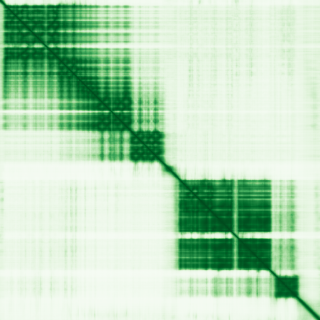
Predicted protein structure

Clinical relevance (Genomics England PanelApp)

Moderate Evidence (Amber)

  • Bleeding and platelet disorders

    BIALLELIC, autosomal or pseudoautosomal
  • Monogenic hearing loss

Disease associations (Open Targets)

  • medullary thyroid gland carcinoma

    0.54
  • Familial prostate cancer

    0.48
  • Rare hemorrhagic disorder due to a constitutional platelet anomaly

    0.45
  • neoplasm

    0.40
  • osteoarthritis, hip

    0.40
  • non-small cell lung carcinoma

    0.38
  • thyroid gland carcinoma

    0.37
  • thyroid tumor

    0.37
  • Umbilical hernia

    0.35
  • medical procedure

    0.29

Score is the Open Targets composite evidence score (0-1). Higher = stronger gene-disease association.

Protein function (UniProt)

Ephrin type-B receptor 2

Receptor tyrosine kinase which binds promiscuously transmembrane ephrin-B family ligands residing on adjacent cells, leading to contact-dependent bidirectional signaling into neighboring cells. The signaling pathway downstream of the receptor is referred to as forward signaling while the signaling pathway downstream of the ephrin ligand is referred to as reverse signaling. Functions in axon guidance during development. Involved in the guidance of commissural axons, that form a major interhemispheric connection between the 2 temporal lobes of the cerebral cortex. Also involved in guidance of contralateral inner ear efferent growth cones at the midline and of retinal ganglion cell axons to the optic disk. In addition to axon guidance, also regulates dendritic spines development and maturation and stimulates the formation of excitatory synapses. Upon activation by EFNB1, abolishes the ARHGEF15-mediated negative regulation on excitatory synapse formation. Controls other aspects of development including angiogenesis, palate development and in inner ear development through regulation of endolymph production. Forward and reverse signaling through the EFNB2/EPHB2 complex regulate movement and adhesion of cells that tubularize the urethra and septate the cloaca. May function as a tumor suppressor. May be involved in the regulation of platelet activation and blood coagulation (PubMed:30213874)

Data sources: HGNC (CC BY 4.0), AlphaFold (CC BY 4.0, Jumper et al. Nature 2021), Genomics England PanelApp (CC BY 4.0), ClinGen, Open Targets (CC0), UniProt.

Not for sole clinical decision-making. Always verify against primary sources.