AlphaFold predicted structure
EPHB4 · P54760
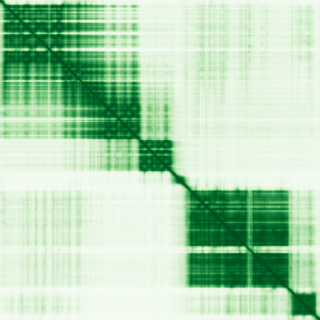
Mean pLDDT
82.0/ 100
Confident
987 residues
Confidence breakdown
- Very high(≥ 90)46%
- Confident(70–90)37%
- Low(50–70)7%
- Very low(< 50)10%
AlphaFold (Jumper et al., 2021) · CC BY 4.0
EPH receptor B4
Annotations refreshed 10 hours ago.
Diagnostic Grade (Green)
Fetal anomalies
MONOALLELIC, autosomal or pseudoautosomal, imprinted status unknownFetal hydrops
MONOALLELIC, autosomal or pseudoautosomal, imprinted status unknownHereditary haemorrhagic telangiectasia
MONOALLELIC, autosomal or pseudoautosomal, imprinted status unknownPrimary lymphoedema
MONOALLELIC, autosomal or pseudoautosomal, imprinted status unknownVascular skin disorders
MONOALLELIC, autosomal or pseudoautosomal, NOT imprintedCerebral vascular malformations
MONOALLELIC, autosomal or pseudoautosomal, imprinted status unknownMosaic skin disorders - deep sequencing
MONOALLELIC, autosomal or pseudoautosomal, NOT imprintedDDG2P
MONOALLELIC, autosomal or pseudoautosomal, imprinted status unknown+1 more panels — install the extension to see the full list inline on any page.
Capillary malformation - arteriovenous malformation
lymphatic malformation 7
medullary thyroid gland carcinoma
Abnormality of the cardiovascular system
vein of Galen aneurysm
EPHB4-associated vascular malformation spectrum
capillary malformation-arteriovenous malformation syndrome
Milroy disease
neoplasm
non-small cell lung carcinoma
Score is the Open Targets composite evidence score (0-1). Higher = stronger gene-disease association.
Ephrin type-B receptor 4
Receptor tyrosine kinase which binds promiscuously to transmembrane ephrin-B family ligands residing on adjacent cells, leading to contact-dependent bidirectional signaling into neighboring cells. The signaling pathway downstream of the receptor is referred to as forward signaling while the signaling pathway downstream of the ephrin ligand is referred to as reverse signaling. Together with its cognate ligand/functional ligand EFNB2, it is involved in the regulation of cell adhesion and migration, and plays a central role in heart morphogenesis, angiogenesis and blood vessel remodeling and permeability. EPHB4-mediated forward signaling controls cellular repulsion and segregation from EFNB2-expressing cells. Phosphorylates inactive tyrosine-protein kinase EPHB6 which promotes interaction of EPHB6 with SH2 domains, allowing it to recruit SH2 domain-containing signaling adapters (PubMed:34431498)
EPHB4 · P54760

Mean pLDDT
82.0/ 100
Confident
987 residues
Confidence breakdown
AlphaFold (Jumper et al., 2021) · CC BY 4.0