
AlphaFold predicted structure
ERCC2 · P18074
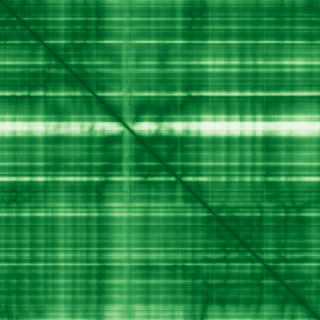
Mean pLDDT
87.6/ 100
Confident
760 residues
Confidence breakdown
- Very high(≥ 90)54%
- Confident(70–90)41%
- Low(50–70)4%
- Very low(< 50)1%
Open interactive 3D viewer
AlphaFold (Jumper et al., 2021) · CC BY 4.0
ERCC excision repair 2, TFIIH core complex helicase subunit
Annotations refreshed 2 months ago.
Diagnostic Grade (Green)
Adult solid tumours cancer susceptibility
BIALLELIC, autosomal or pseudoautosomalBilateral congenital or childhood onset cataracts
BIALLELIC, autosomal or pseudoautosomalChildhood solid tumours
BIALLELIC, autosomal or pseudoautosomalChildhood solid tumours cancer susceptibility
BIALLELIC, autosomal or pseudoautosomalDDG2P
BIALLELIC, autosomal or pseudoautosomalFetal anomalies
BIALLELIC, autosomal or pseudoautosomalIntellectual disability
BIALLELIC, autosomal or pseudoautosomalXeroderma pigmentosum, Trichothiodystrophy or Cockayne syndrome
BIALLELIC, autosomal or pseudoautosomal+8 more panels — install the extension to see the full list inline on any page.
trichothiodystrophy 1, photosensitive
cerebrooculofacioskeletal syndrome 2
Xeroderma pigmentosum complementation group D
xeroderma pigmentosum group D
trichothiodystrophy
xeroderma pigmentosum
xeroderma pigmentosum-Cockayne syndrome complex
urinary bladder cancer
COFS syndrome
photosensitive trichothiodystrophy
Score is the Open Targets composite evidence score (0-1). Higher = stronger gene-disease association.
General transcription and DNA repair factor IIH helicase subunit XPD
ATP-dependent 5'-3' DNA helicase (PubMed:31253769, PubMed:8413672, PubMed:9771713). Component of the general transcription and DNA repair factor IIH (TFIIH) core complex, not absolutely essential for minimal transcription in vitro (PubMed:10024882, PubMed:17466626, PubMed:9771713). Required for transcription-coupled nucleotide excision repair (NER) of damaged DNA; recognizes damaged bases (PubMed:17466626, PubMed:23352696, PubMed:9771713). Sequestered in chromatin on UV-damaged DNA (PubMed:23352696). When complexed to CDK-activating kinase (CAK), involved in transcription by RNA polymerase II. In NER, TFIIH acts by opening DNA around the lesion to allow the excision of the damaged oligonucleotide and its replacement by a new DNA fragment. The ATP-dependent helicase activity of XPD/ERCC2 is required for DNA opening. Involved in DNA lesion verification (PubMed:31253769). In transcription, TFIIH has an essential role in transcription initiation. When the pre-initiation complex (PIC) has been established, TFIIH is required for promoter opening and promoter escape. Phosphorylation of the C-terminal tail (CTD) of the largest subunit of RNA polymerase II by the kinase module CAK controls the initiation of transcription. XPD/ERCC2 acts by forming a bridge between CAK and the core-TFIIH complex. The structure of the TFIIH transcription complex differs from the NER-TFIIH complex; large movements by XPD/ERCC2 and XPB/ERCC3 are stabilized by XPA which allow this subunit to contact ssDNA (PubMed:31253769, PubMed:33902107). Involved in the regulation of vitamin-D receptor activity. As part of the mitotic spindle-associated MMXD complex it plays a role in chromosome segregation. Might have a role in aging process and could play a causative role in the generation of skin cancers
Curated MONDO disease pages that list ERCC2 among their top associated genes.
ERCC2 · P18074
Mean pLDDT
87.6/ 100
Confident
760 residues
Confidence breakdown
AlphaFold (Jumper et al., 2021) · CC BY 4.0