Skip to content
GenoLensGenoLens

ERCC3

Chr 2q14.3

ERCC excision repair 3, TFIIH core complex helicase subunit

Aliases:
XPB, BTF2, RAD25, Ssl2
MANE:
ENST00000285398.7

Annotations refreshed 1 month ago.

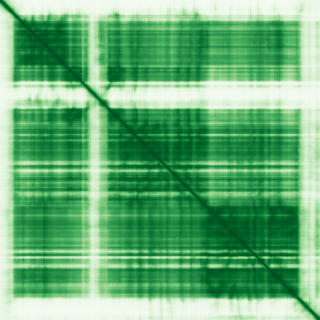
Predicted protein structure

Clinical relevance (Genomics England PanelApp)

Diagnostic Grade (Green)

  • Adult solid tumours cancer susceptibility

    BIALLELIC, autosomal or pseudoautosomal
  • Bilateral congenital or childhood onset cataracts

    BIALLELIC, autosomal or pseudoautosomal
  • Childhood solid tumours

    BIALLELIC, autosomal or pseudoautosomal
  • Childhood solid tumours cancer susceptibility

    BIALLELIC, autosomal or pseudoautosomal
  • DDG2P

    BIALLELIC, autosomal or pseudoautosomal
  • Fetal anomalies

    BIALLELIC, autosomal or pseudoautosomal
  • Intellectual disability

    BIALLELIC, autosomal or pseudoautosomal
  • Xeroderma pigmentosum, Trichothiodystrophy or Cockayne syndrome

    BIALLELIC, autosomal or pseudoautosomal

+6 more panels — install the extension to see the full list inline on any page.

Disease associations (Open Targets)

  • xeroderma pigmentosum group B

    0.76
  • trichothiodystrophy 2, photosensitive

    0.71
  • Xeroderma pigmentosum complementation group B

    0.69
  • xeroderma pigmentosum-Cockayne syndrome complex

    0.68
  • trichothiodystrophy

    0.68
  • xeroderma pigmentosum

    0.67
  • HIV infectious disease

    0.60
  • photosensitive trichothiodystrophy

    0.56
  • trichothiodystrophy 1, photosensitive

    0.50
  • hereditary disease

    0.50

Score is the Open Targets composite evidence score (0-1). Higher = stronger gene-disease association.

Protein function (UniProt)

General transcription and DNA repair factor IIH helicase/translocase subunit XPB

ATP-dependent 3'-5' DNA helicase/translocase (PubMed:17466626, PubMed:27193682, PubMed:33902107, PubMed:8465201, PubMed:8663148). Binds dsDNA rather than ssDNA, unzipping it in a translocase rather than classical helicase activity (PubMed:27193682, PubMed:33902107). Component of the general transcription and DNA repair factor IIH (TFIIH) core complex (PubMed:10024882, PubMed:17466626, PubMed:8157004, PubMed:8465201). When complexed to CDK-activating kinase (CAK), involved in RNA transcription by RNA polymerase II. The ATPase activity of XPB/ERCC3, but not its helicase activity, is required for DNA opening; it may wrap around the damaged DNA wedging it open, causing localized melting that allows XPD/ERCC2 helicase to anchor (PubMed:10024882, PubMed:17466626). In transcription, TFIIH has an essential role in transcription initiation (PubMed:30894545, PubMed:8157004). When the pre-initiation complex (PIC) has been established, TFIIH is required for promoter opening and promoter escape (PubMed:8157004). The ATP-dependent helicase activity of XPB/ERCC3 is required for promoter opening and promoter escape (PubMed:10024882). In transcription pre-initiation complexes induces and propagates a DNA twist to open DNA (PubMed:27193682, PubMed:33902107). Also involved in transcription-coupled nucleotide excision repair (NER) of damaged DNA (PubMed:17466626, PubMed:2111438, PubMed:8157004). In NER, TFIIH acts by opening DNA around the lesion to allow the excision of the damaged oligonucleotide and its replacement by a new DNA fragment. The structure of the TFIIH transcription complex differs from the NER-TFIIH complex; large movements by XPD/ERCC2 and XPB/ERCC3 are stabilized by XPA (PubMed:31253769, PubMed:33902107). XPA retains XPB/ERCC3 at the 5' end of a DNA bubble (mimicking DNA damage) (PubMed:31253769)

Curated MONDO disease pages that list ERCC3 among their top associated genes.

Data sources: HGNC (CC BY 4.0), AlphaFold (CC BY 4.0, Jumper et al. Nature 2021), Genomics England PanelApp (CC BY 4.0), ClinGen, Open Targets (CC0), UniProt.

Not for sole clinical decision-making. Always verify against primary sources.