
AlphaFold predicted structure
ERCC5 · P28715
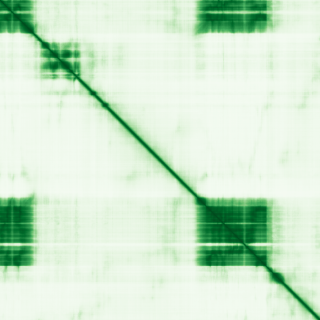
Mean pLDDT
57.1/ 100
Low
1,186 residues
Confidence breakdown
- Very high(≥ 90)12%
- Confident(70–90)26%
- Low(50–70)14%
- Very low(< 50)49%
Open interactive 3D viewer
AlphaFold (Jumper et al., 2021) · CC BY 4.0
ERCC excision repair 5, endonuclease
Annotations refreshed 2 months ago.
Diagnostic Grade (Green)
Adult solid tumours cancer susceptibility
BIALLELIC, autosomal or pseudoautosomalArthrogryposis
BIALLELIC, autosomal or pseudoautosomalChildhood solid tumours
BIALLELIC, autosomal or pseudoautosomalChildhood solid tumours cancer susceptibility
BIALLELIC, autosomal or pseudoautosomalDDG2P
BIALLELIC, autosomal or pseudoautosomalFetal anomalies
BIALLELIC, autosomal or pseudoautosomalIntellectual disability
BIALLELIC, autosomal or pseudoautosomalXeroderma pigmentosum, Trichothiodystrophy or Cockayne syndrome
BIALLELIC, autosomal or pseudoautosomal+5 more panels — install the extension to see the full list inline on any page.
xeroderma pigmentosum group G
xeroderma pigmentosum-Cockayne syndrome complex
Xeroderma pigmentosum complementation group G
COFS syndrome
xeroderma pigmentosum
hereditary disease
ovarian cancer
prostate carcinoma
melanoma
cutaneous melanoma
Score is the Open Targets composite evidence score (0-1). Higher = stronger gene-disease association.
DNA excision repair protein ERCC-5
Single-stranded structure-specific DNA endonuclease involved in DNA excision repair (PubMed:32522879, PubMed:32821917, PubMed:7651464, PubMed:8078765, PubMed:8090225, PubMed:8206890). Makes the 3'incision in DNA nucleotide excision repair (NER) (PubMed:32522879, PubMed:32821917, PubMed:8078765, PubMed:8090225). Binds and bends DNA repair bubble substrate and breaks base stacking at the single-strand/double-strand DNA junction of the DNA bubble (PubMed:32522879). Plays a role in base excision repair (BER) by promoting the binding of DNA glycosylase NTHL1 to its substrate and increasing NTHL1 catalytic activity that removes oxidized pyrimidines from DNA (PubMed:9927729). Involved in transcription-coupled nucleotide excision repair (TCR) which allows RNA polymerase II-blocking lesions to be rapidly removed from the transcribed strand of active genes (PubMed:16246722). Functions during the initial step of TCR in cooperation with ERCC6/CSB to recognized stalled RNA polymerase II (PubMed:16246722). Also, stimulates ERCC6/CSB binding to the DNA repair bubble and ERCC6/CSB ATPase activity (PubMed:16246722). Required for DNA replication fork maintenance and preservation of genomic stability (PubMed:26833090, PubMed:32522879). Involved in homologous recombination repair (HRR) induced by DNA replication stress by recruiting RAD51, BRCA2, and PALB2 to the damaged DNA site (PubMed:26833090). In TFIIH stimulates the 5'-3' helicase activity of XPD/ERCC2 and the DNA translocase activity of XPB/ERCC3 (PubMed:31253769). During HRR, binds to the replication fork with high specificity and stabilizes it (PubMed:32522879). Also, acts upstream of HRR, to promote the release of BRCA1 from DNA (PubMed:26833090)
Curated MONDO disease pages that list ERCC5 among their top associated genes.
ERCC5 · P28715
Mean pLDDT
57.1/ 100
Low
1,186 residues
Confidence breakdown
AlphaFold (Jumper et al., 2021) · CC BY 4.0