
AlphaFold predicted structure
ERF · P50548
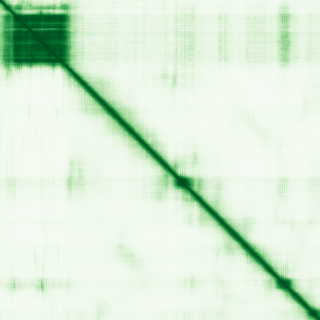
Mean pLDDT
53.8/ 100
Low
548 residues
Confidence breakdown
- Very high(≥ 90)13%
- Confident(70–90)4%
- Low(50–70)19%
- Very low(< 50)64%
Open interactive 3D viewer
AlphaFold (Jumper et al., 2021) · CC BY 4.0
ETS2 repressor factor
Annotations refreshed 3 months ago.
Diagnostic Grade (Green)
Common craniosynostosis syndromes
MONOALLELIC, autosomal or pseudoautosomal, imprinted status unknownDDG2P
MONOALLELIC, autosomal or pseudoautosomal, imprinted status unknownFetal anomalies
MONOALLELIC, autosomal or pseudoautosomal, imprinted status unknownRare syndromic craniosynostosis or isolated multisuture synostosis
MONOALLELIC, autosomal or pseudoautosomal, imprinted status unknownSkeletal dysplasia
MONOALLELIC, autosomal or pseudoautosomal, NOT imprintedHydrocephalus
MONOALLELIC, autosomal or pseudoautosomal, imprinted status unknownIntellectual disability
MONOALLELIC, autosomal or pseudoautosomal, imprinted status unknowncraniosynostosis 4
Chitayat syndrome
craniosynostosis
Lambdoidal craniosynostosis
TWIST1-related craniosynostosis
hereditary disease
neurodegenerative disease
Noonan syndrome
Crouzon disease
Crouzon syndrome
Score is the Open Targets composite evidence score (0-1). Higher = stronger gene-disease association.
ETS domain-containing transcription factor ERF
Potent transcriptional repressor that binds to the H1 element of the Ets2 promoter. May regulate other genes involved in cellular proliferation. Required for extraembryonic ectoderm differentiation, ectoplacental cone cavity closure, and chorioallantoic attachment (By similarity). May be important for regulating trophoblast stem cell differentiation (By similarity)
ERF · P50548
Mean pLDDT
53.8/ 100
Low
548 residues
Confidence breakdown
AlphaFold (Jumper et al., 2021) · CC BY 4.0