
AlphaFold predicted structure
ESCO2 · Q56NI9
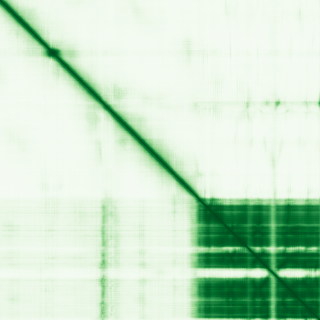
Mean pLDDT
58.4/ 100
Low
601 residues
Confidence breakdown
- Very high(≥ 90)28%
- Confident(70–90)9%
- Low(50–70)6%
- Very low(< 50)58%
Open interactive 3D viewer
AlphaFold (Jumper et al., 2021) · CC BY 4.0
establishment of sister chromatid cohesion N-acetyltransferase 2
Annotations refreshed 2 months ago.
Diagnostic Grade (Green)
Clefting
BIALLELIC, autosomal or pseudoautosomalDDG2P
BIALLELIC, autosomal or pseudoautosomalFetal anomalies
BIALLELIC, autosomal or pseudoautosomalIntellectual disability
BIALLELIC, autosomal or pseudoautosomalLimb disorders
BIALLELIC, autosomal or pseudoautosomalRadial dysplasia
BIALLELIC, autosomal or pseudoautosomalSkeletal dysplasia
BIALLELIC, autosomal or pseudoautosomalStructural eye disease
BIALLELIC, autosomal or pseudoautosomal+3 more panels — install the extension to see the full list inline on any page.
Roberts-SC phocomelia syndrome
Juberg-Hayward syndrome
hereditary disease
Absent radius
hypercholesterolemia, familial, 1
glomerulonephritis
temporal arteritis
Hereditary breast and ovarian cancer syndrome
hereditary breast ovarian cancer syndrome
neoplasm
Score is the Open Targets composite evidence score (0-1). Higher = stronger gene-disease association.
N-acetyltransferase ESCO2
Acetyltransferase required for the establishment of sister chromatid cohesion (PubMed:15821733, PubMed:15958495). Couples the processes of cohesion and DNA replication to ensure that only sister chromatids become paired together. In contrast to the structural cohesins, the deposition and establishment factors are required only during the S phase. Acetylates the cohesin component SMC3 (PubMed:21111234)
ESCO2 · Q56NI9
Mean pLDDT
58.4/ 100
Low
601 residues
Confidence breakdown
AlphaFold (Jumper et al., 2021) · CC BY 4.0