Skip to content
GenoLensGenoLens

EXOC7

Chr 17q25.1

exocyst complex component 7

Aliases:
EXO70, KIAA1067, YJL085W, Exo70p, BLOM4
MANE:
ENST00000589210.6

Annotations refreshed 9 hours ago.

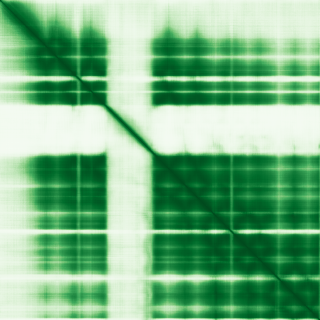
Predicted protein structure

Clinical relevance (Genomics England PanelApp)

Diagnostic Grade (Green)

  • Fetal anomalies

    BIALLELIC, autosomal or pseudoautosomal
  • Early onset or syndromic epilepsy

    BIALLELIC, autosomal or pseudoautosomal
  • Intellectual disability

    BIALLELIC, autosomal or pseudoautosomal
  • Severe microcephaly

    BIALLELIC, autosomal or pseudoautosomal

Disease associations (Open Targets)

  • neurodevelopmental disorder with seizures and brain atrophy

    0.68
  • neurodegenerative disease

    0.53
  • hereditary disease

    0.41
  • microcephaly

    0.26
  • Brain atrophy

    0.26
  • Global developmental delay

    0.26
  • Seizure

    0.25
  • complex neurodevelopmental disorder

    0.18
  • neoplasm

    0.09
  • breast cancer

    0.08

Score is the Open Targets composite evidence score (0-1). Higher = stronger gene-disease association.

Protein function (UniProt)

Exocyst complex component 7

Component of the exocyst complex involved in the docking of exocytic vesicles with fusion sites on the plasma membrane. In adipocytes, plays a crucial role in targeting SLC2A4 vesicle to the plasma membrane in response to insulin, perhaps directing the vesicle to the precise site of fusion (By similarity). It is required for neuron survival and plays an essential role in cortical development (By similarity)

Data sources: HGNC (CC BY 4.0), AlphaFold (CC BY 4.0, Jumper et al. Nature 2021), Genomics England PanelApp (CC BY 4.0), ClinGen, Open Targets (CC0), UniProt.

Not for sole clinical decision-making. Always verify against primary sources.