
AlphaFold predicted structure
EXTL3 · O43909
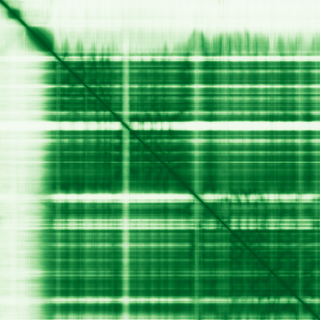
Mean pLDDT
83.7/ 100
Confident
919 residues
Confidence breakdown
- Very high(≥ 90)50%
- Confident(70–90)35%
- Low(50–70)7%
- Very low(< 50)8%
Open interactive 3D viewer
AlphaFold (Jumper et al., 2021) · CC BY 4.0
exostosin like glycosyltransferase 3
Annotations refreshed 3 months ago.
Diagnostic Grade (Green)
COVID-19 research
BIALLELIC, autosomal or pseudoautosomalDDG2P
BIALLELIC, autosomal or pseudoautosomalFetal anomalies
BIALLELIC, autosomal or pseudoautosomalIntellectual disability
BIALLELIC, autosomal or pseudoautosomalPrimary immunodeficiency or monogenic inflammatory bowel disease
BIALLELIC, autosomal or pseudoautosomalSkeletal dysplasia
BIALLELIC, autosomal or pseudoautosomalRare syndromic craniosynostosis or isolated multisuture synostosis
BIALLELIC, autosomal or pseudoautosomalimmunoskeletal dysplasia with neurodevelopmental abnormalities
Skeletal dysplasia - intellectual disability
neurodegenerative disease
hereditary disease
phototoxic dermatitis
meningioma
familial meningioma
retinal disorder
retinoschisis
cardiac transplant
Score is the Open Targets composite evidence score (0-1). Higher = stronger gene-disease association.
Exostosin-like 3
Glycosyltransferase which regulates the biosynthesis of heparan sulfate (HS) (PubMed:28132690, PubMed:28148688). Initiates HS synthesis by transferring the first N-acetyl-alpha-D-glucosamine (alpha-GlcNAc) residue (GlcNAcT-I activity) to the tetrasaccharide linker (GlcA-Gal-Gal-Xyl-)Ser core linker (PubMed:11390981, PubMed:35676258). May also transfer alpha-GlcNAc residues during HS elongation (GlcNAcT-II activity) (PubMed:11390981, PubMed:35676258). Lacks glucuronyl transferase II (GlcAT-II) activity (PubMed:11390981, PubMed:35676258). Important for both skeletal development and hematopoiesis, through the formation of HS proteoglycans (HSPGs) (PubMed:11390981, PubMed:22727489, PubMed:28132690, PubMed:28148688, PubMed:35676258). Through the synthesis of HS, regulates postnatal pancreatic islet maturation and insulin secretion (By similarity)
EXTL3 · O43909
Mean pLDDT
83.7/ 100
Confident
919 residues
Confidence breakdown
AlphaFold (Jumper et al., 2021) · CC BY 4.0