Skip to content
GenoLensGenoLens

EZH1

Chr 17q21.2

enhancer of zeste 1 polycomb repressive complex 2 subunit

Aliases:
KIAA0388, KMT6B
MANE:
ENST00000428826.7

Annotations refreshed 9 hours ago.

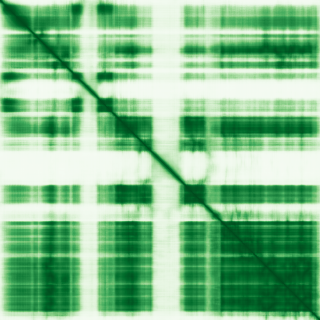
Predicted protein structure

Clinical relevance (Genomics England PanelApp)

Diagnostic Grade (Green)

  • DDG2P

    BOTH monoallelic and biallelic, autosomal or pseudoautosomal
  • Intellectual disability

    BOTH monoallelic and biallelic, autosomal or pseudoautosomal

Disease associations (Open Targets)

  • neurodevelopmental disorder

    0.43
  • Intellectual disability

    0.37
  • Eczematoid dermatitis

    0.14
  • dermatitis

    0.14
  • hepatocellular carcinoma

    0.09
  • mantle cell lymphoma

    0.08
  • breast cancer

    0.08
  • Miyoshi myopathy

    0.08
  • glioblastoma

    0.08
  • bronchopulmonary dysplasia

    0.08

Score is the Open Targets composite evidence score (0-1). Higher = stronger gene-disease association.

Protein function (UniProt)

Histone-lysine N-methyltransferase EZH1

Polycomb group (PcG) protein. Catalytic subunit of the PRC2/EED-EZH1 complex, which methylates 'Lys-27' of histone H3, leading to transcriptional repression of the affected target gene. Able to mono-, di- and trimethylate 'Lys-27' of histone H3 to form H3K27me1, H3K27me2 and H3K27me3, respectively. Required for embryonic stem cell derivation and self-renewal, suggesting that it is involved in safeguarding embryonic stem cell identity. Compared to EZH2-containing complexes, it is less abundant in embryonic stem cells, has weak methyltransferase activity and plays a less critical role in forming H3K27me3, which is required for embryonic stem cell identity and proper differentiation

Data sources: HGNC (CC BY 4.0), AlphaFold (CC BY 4.0, Jumper et al. Nature 2021), Genomics England PanelApp (CC BY 4.0), ClinGen, Open Targets (CC0), UniProt.

Not for sole clinical decision-making. Always verify against primary sources.