
AlphaFold predicted structure
F10 · P00742
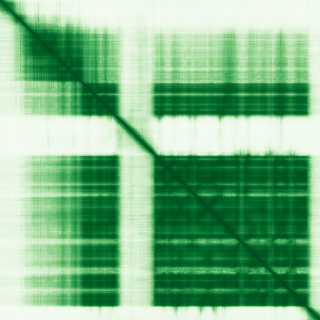
Mean pLDDT
80.3/ 100
Confident
488 residues
Confidence breakdown
- Very high(≥ 90)55%
- Confident(70–90)21%
- Low(50–70)9%
- Very low(< 50)15%
Open interactive 3D viewer
AlphaFold (Jumper et al., 2021) · CC BY 4.0
coagulation factor X
Annotations refreshed 2 months ago.
Diagnostic Grade (Green)
Bleeding and platelet disorders
BIALLELIC, autosomal or pseudoautosomalFactor X deficiency
BIALLELIC, autosomal or pseudoautosomalInherited bleeding disorders
BIALLELIC, autosomal or pseudoautosomalfactor X deficiency
congenital factor X deficiency
venous thromboembolism
pulmonary embolism
atrial fibrillation
deep vein thrombosis
Stroke
hemophilia A
stroke disorder
thrombotic disease
Score is the Open Targets composite evidence score (0-1). Higher = stronger gene-disease association.
Coagulation factor X
Factor Xa is a vitamin K-dependent glycoprotein that converts prothrombin to thrombin in the presence of factor Va, calcium and phospholipid during blood clotting (PubMed:22409427, PubMed:39880037). Factor Xa activates pro-inflammatory signaling pathways in a protease-activated receptor (PAR)-dependent manner (PubMed:24041930, PubMed:30568593, PubMed:34831181, PubMed:18202198). Up-regulates expression of protease-activated receptors (PARs) F2R, F2RL1 and F2RL2 in dermal microvascular endothelial cells (PubMed:35738824). Triggers the production of pro-inflammatory cytokines, such as MCP-1/CCL2 and IL6, in cardiac fibroblasts and umbilical vein endothelial cells in PAR-1/F2R-dependent manner (PubMed:30568593, PubMed:34831181). Triggers the production of pro-inflammatory cytokines, such as MCP-1/CCL2, IL6, TNF/TNF, IL-1beta/IL1B, IL8/CXCL8 and IL18, in endothelial cells and atrial tissues (PubMed:24041930, PubMed:35738824, PubMed:9780208). Induces expression of adhesion molecules, such as ICAM1, VCAM1 and SELE, in endothelial cells and atrial tissues (PubMed:24041930, PubMed:35738824, PubMed:9780208). Increases expression of phosphorylated ERK1/2 in dermal microvascular endothelial cells and atrial tissues (PubMed:24041930, PubMed:35738824). Triggers activation of the transcription factor NF-kappa-B in dermal microvascular endothelial cells and atrial tissues (PubMed:24041930, PubMed:35738824). Activates pro-inflammatory and pro-fibrotic responses in dermal fibroblasts and enhances wound healing probably via PAR-2/F2RL1-dependent mechanism (PubMed:18202198). Activates barrier protective signaling responses in endothelial cells in PAR-2/F2RL1-dependent manner; the activity depends on the cleavage of PAR-2/F2RL1 by factor Xa (PubMed:22409427). Up-regulates expression of plasminogen activator inhibitor 1 (SERPINE1) in atrial tissues (PubMed:24041930)
Curated MONDO disease pages that list F10 among their top associated genes.
F10 · P00742
Mean pLDDT
80.3/ 100
Confident
488 residues
Confidence breakdown
AlphaFold (Jumper et al., 2021) · CC BY 4.0