
AlphaFold predicted structure
F2 · P00734
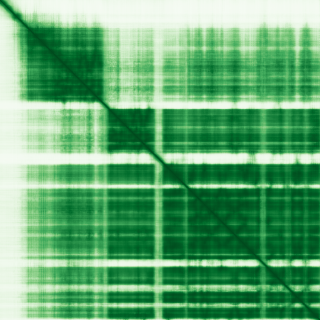
Mean pLDDT
83.9/ 100
Confident
622 residues
Confidence breakdown
- Very high(≥ 90)55%
- Confident(70–90)28%
- Low(50–70)7%
- Very low(< 50)10%
Open interactive 3D viewer
AlphaFold (Jumper et al., 2021) · CC BY 4.0
coagulation factor II, thrombin
Annotations refreshed 2 months ago.
Diagnostic Grade (Green)
Bleeding and platelet disorders
BIALLELIC, autosomal or pseudoautosomalFactor II deficiency
BIALLELIC, autosomal or pseudoautosomalInherited bleeding disorders
BOTH monoallelic and biallelic (but BIALLELIC mutations cause a more SEVERE disease form), autosomal or pseudoautosomalThrombophilia with a likely monogenic cause
BOTH monoallelic and biallelic (but BIALLELIC mutations cause a more SEVERE disease form), autosomal or pseudoautosomalcongenital prothrombin deficiency
Congenital factor II deficiency
thrombophilia due to thrombin defect
venous thromboembolism
deep vein thrombosis
blood coagulation disease
ischemic stroke
prothrombin deficiency
pulmonary embolism
hereditary thrombophilia due to congenital protein C deficiency
Score is the Open Targets composite evidence score (0-1). Higher = stronger gene-disease association.
Prothrombin
Thrombin, which cleaves bonds after Arg and Lys, converts fibrinogen to fibrin and activates factors V, VII, VIII, XIII, and, in complex with thrombomodulin, protein C. Functions in blood homeostasis, inflammation and wound healing. Activates coagulation factor XI (F11); activation is promoted by the contact with negatively charged surfaces (PubMed:2019570, PubMed:21976677). Triggers the production of pro-inflammatory cytokines, such as MCP-1/CCL2 and IL8/CXCL8, in endothelial cells (PubMed:30568593, PubMed:9780208)
Curated MONDO disease pages that list F2 among their top associated genes.
F2 · P00734
Mean pLDDT
83.9/ 100
Confident
622 residues
Confidence breakdown
AlphaFold (Jumper et al., 2021) · CC BY 4.0