
AlphaFold predicted structure
FANCL · Q9NW38
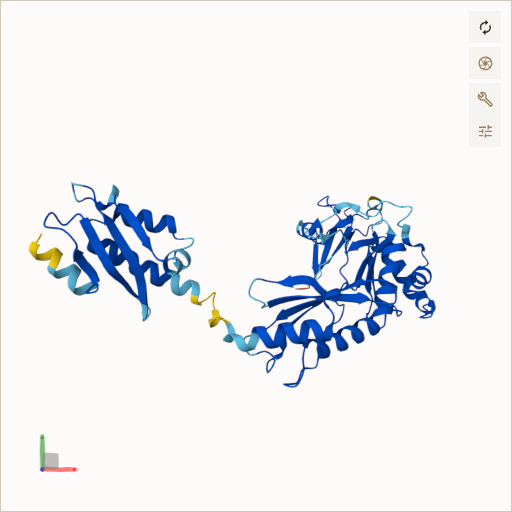
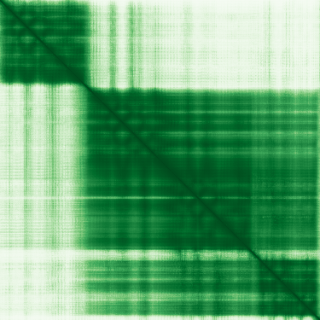
Mean pLDDT
91.3/ 100
Very high
375 residues
Confidence breakdown
- Very high(≥ 90)76%
- Confident(70–90)20%
- Low(50–70)4%
- Very low(< 50)1%
Open interactive 3D viewer
AlphaFold (Jumper et al., 2021) · CC BY 4.0
FA complementation group L
Annotations refreshed 3 months ago.
Diagnostic Grade (Green)
Adult solid tumours cancer susceptibility
BIALLELIC, autosomal or pseudoautosomalChildhood solid tumours
BIALLELIC, autosomal or pseudoautosomalChildhood solid tumours cancer susceptibility
BIALLELIC, autosomal or pseudoautosomalConfirmed Fanconi anaemia or Bloom syndrome
BIALLELIC, autosomal or pseudoautosomalCOVID-19 research
BIALLELIC, autosomal or pseudoautosomalCytopenias and congenital anaemias
BIALLELIC, autosomal or pseudoautosomalDDG2P
BIALLELIC, autosomal or pseudoautosomalFetal anomalies
BIALLELIC, autosomal or pseudoautosomal+12 more panels — install the extension to see the full list inline on any page.
Fanconi anemia
Fanconi anemia complementation group L
acute myeloid leukemia
myelodysplastic syndrome
Bone marrow hypocellularity
hereditary disease
Fanconi anemia complementation group A
hypertensive disorder
Abnormality of the skeletal system
head and neck cancer
Score is the Open Targets composite evidence score (0-1). Higher = stronger gene-disease association.
E3 ubiquitin-protein ligase FANCL
Ubiquitin ligase protein that mediates monoubiquitination of FANCD2 in the presence of UBE2T, a key step in the DNA damage pathway (PubMed:12973351, PubMed:16916645, PubMed:17938197, PubMed:19111657, PubMed:24389026). Also mediates monoubiquitination of FANCI (PubMed:19589784). May stimulate the ubiquitin release from UBE2W. May be required for proper primordial germ cell proliferation in the embryonic stage, whereas it is probably not needed for spermatogonial proliferation after birth
FANCL · Q9NW38
Mean pLDDT
91.3/ 100
Very high
375 residues
Confidence breakdown
AlphaFold (Jumper et al., 2021) · CC BY 4.0