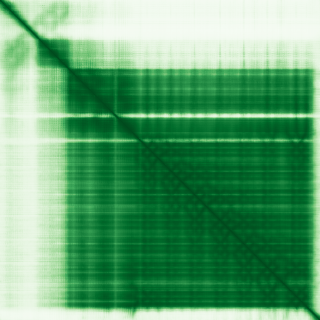
F-box/WD repeat-containing protein 11
Substrate recognition component of a SCF (SKP1-CUL1-F-box protein) E3 ubiquitin-protein ligase complex which mediates the ubiquitination and subsequent proteasomal degradation of target proteins (PubMed:10437795, PubMed:10648623, PubMed:11158290, PubMed:19966869, PubMed:20347421, PubMed:22017875, PubMed:22017876, PubMed:36608670). Probably recognizes and binds to phosphorylated target proteins: the interaction with substrates requires the phosphorylation of the two serine residues in the substrates' destruction motif D-S-G-X(2,3,4)-S (PubMed:10437795, PubMed:10648623, PubMed:19966869, PubMed:20347421, PubMed:22017875, PubMed:22017876, PubMed:36608670). SCF(FBXW11) mediates the ubiquitination of phosphorylated CTNNB1 and participates in Wnt signaling regulation (PubMed:10321728). SCF(FBXW11) plays a key role in NF-kappa-B activation by mediating ubiquitination of phosphorylated NFKBIA, leading to its degradation by the proteasome, thereby allowing the associated NF-kappa-B complex to translocate into the nucleus and to activate transcription (PubMed:10321728, PubMed:10437795, PubMed:10644755, PubMed:20347421). The SCF(FBXW11) complex also regulates NF-kappa-B by mediating ubiquitination of phosphorylated NFKB1: specifically ubiquitinates the p105 form of NFKB1, leading to its degradation (PubMed:11158290). SCF(FBXW11) mediates the ubiquitination of IFNAR1 (PubMed:14532120, PubMed:15337770). SCF(FBXW11) mediates the ubiquitination of CEP68; this is required for centriole separation during mitosis (PubMed:25503564). Involved in the oxidative stress-induced a ubiquitin-mediated decrease in RCAN1 (PubMed:18575781). Mediates the degradation of CDC25A induced by ionizing radiation in cells progressing through S phase and thus may function in the intra-S-phase checkpoint (PubMed:14603323). Has an essential role in the control of the clock-dependent transcription via degradation of phosphorylated PER1 and phosphorylated PER2 (PubMed:15917222). SCF(FBXW11) mediates the ubiquitination of CYTH1, and probably CYTH2 (PubMed:29420262). SCF(FBXW11) acts as a regulator of mTORC1 signaling pathway by catalyzing ubiquitination and subsequent proteasomal degradation of phosphorylated DEPTOR, TFE3 and MITF (PubMed:22017875, PubMed:22017876, PubMed:36608670)