
AlphaFold predicted structure
FBXW7 · Q969H0
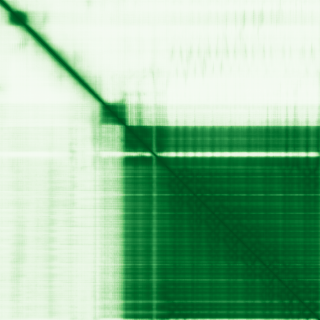
Mean pLDDT
77.0/ 100
Confident
707 residues
Confidence breakdown
- Very high(≥ 90)61%
- Confident(70–90)7%
- Low(50–70)5%
- Very low(< 50)28%
Open interactive 3D viewer
AlphaFold (Jumper et al., 2021) · CC BY 4.0
F-box and WD repeat domain containing 7
Annotations refreshed 2 months ago.
Diagnostic Grade (Green)
DDG2P
MONOALLELIC, autosomal or pseudoautosomal, imprinted status unknownFetal anomalies
MONOALLELIC, autosomal or pseudoautosomal, NOT imprintedIntellectual disability
MONOALLELIC, autosomal or pseudoautosomal, imprinted status unknownChildhood solid tumours
MONOALLELIC, autosomal or pseudoautosomal, NOT imprintedCytopenias and congenital anaemias
Unknowndevelopmental delay, hypotonia, and impaired language
colorectal adenocarcinoma
cervical squamous cell carcinoma
endometrial cancer
colon adenocarcinoma
urinary bladder cancer
type 2 diabetes mellitus
esophageal cancer
uterine carcinosarcoma
head and neck squamous cell carcinoma
Score is the Open Targets composite evidence score (0-1). Higher = stronger gene-disease association.
F-box/WD repeat-containing protein 7
Substrate recognition component of a SCF (SKP1-CUL1-F-box protein) E3 ubiquitin-protein ligase complex which mediates the ubiquitination and subsequent proteasomal degradation of target proteins (PubMed:17434132, PubMed:22748924, PubMed:26976582, PubMed:28727686, PubMed:34741373, PubMed:35395208). Recognizes and binds phosphorylated sites/phosphodegrons within target proteins and thereafter brings them to the SCF complex for ubiquitination (PubMed:17434132, PubMed:22748924, PubMed:26774286, PubMed:26976582, PubMed:28727686, PubMed:34741373). Identified substrates include cyclin-E (CCNE1 or CCNE2), DISC1, JUN, MYC, NOTCH1 released notch intracellular domain (NICD), NFE2L1, NOTCH2, MCL1, MLST8, RICTOR, and probably PSEN1 (PubMed:11565034, PubMed:11585921, PubMed:12354302, PubMed:14739463, PubMed:15103331, PubMed:17558397, PubMed:17873522, PubMed:22608923, PubMed:22748924, PubMed:25775507, PubMed:25897075, PubMed:26976582, PubMed:28007894, PubMed:28727686, PubMed:29149593, PubMed:34102342). Acts as a negative regulator of JNK signaling by binding to phosphorylated JUN and promoting its ubiquitination and subsequent degradation (PubMed:14739463). Involved in bone homeostasis and negative regulation of osteoclast differentiation (PubMed:29149593). Regulates the amplitude of the cyclic expression of hepatic core clock genes and genes involved in lipid and glucose metabolism via ubiquitination and proteasomal degradation of their transcriptional repressor NR1D1; CDK1-dependent phosphorylation of NR1D1 is necessary for SCF(FBXW7)-mediated ubiquitination (PubMed:27238018). Also able to promote 'Lys-63'-linked ubiquitination in response to DNA damage (PubMed:26774286). The SCF(FBXW7) complex facilitates double-strand break repair following phosphorylation by ATM: phosphorylation promotes localization to sites of double-strand breaks and 'Lys-63'-linked ubiquitination of phosphorylated XRCC4, enhancing DNA non-homologous end joining (PubMed:26774286)
Curated MONDO disease pages that list FBXW7 among their top associated genes.
FBXW7 · Q969H0
Mean pLDDT
77.0/ 100
Confident
707 residues
Confidence breakdown
AlphaFold (Jumper et al., 2021) · CC BY 4.0