Skip to content
GenoLensGenoLens

FGFR2

Chr 10q26.13

fibroblast growth factor receptor 2

Aliases:
CEK3, TK14, TK25, ECT1, K-SAM
MANE:
ENST00000358487.10

Annotations refreshed 1 month ago.

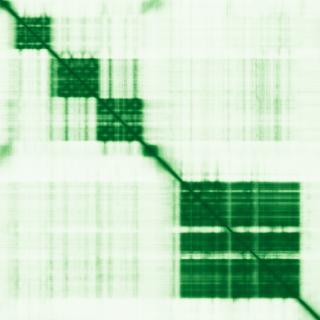
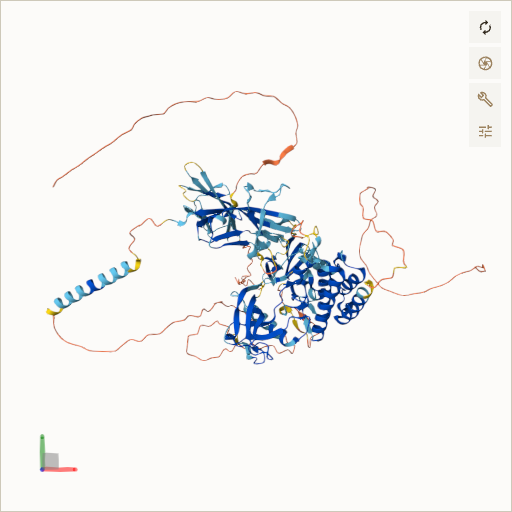
Predicted protein structure

Clinical relevance (Genomics England PanelApp)

Diagnostic Grade (Green)

  • Arthrogryposis

    MONOALLELIC, autosomal or pseudoautosomal, imprinted status unknown
  • Choanal atresia

    MONOALLELIC, autosomal or pseudoautosomal, imprinted status unknown
  • Clefting

    MONOALLELIC, autosomal or pseudoautosomal, imprinted status unknown
  • Common craniosynostosis syndromes

    MONOALLELIC, autosomal or pseudoautosomal, imprinted status unknown
  • DDG2P

    MONOALLELIC, autosomal or pseudoautosomal, imprinted status unknown
  • Deafness and congenital structural abnormalities

    MONOALLELIC, autosomal or pseudoautosomal, imprinted status unknown
  • Fetal anomalies

    MONOALLELIC, autosomal or pseudoautosomal, imprinted status unknown
  • Hydrocephalus

    MONOALLELIC, autosomal or pseudoautosomal, imprinted status unknown

+15 more panels — install the extension to see the full list inline on any page.

Disease associations (Open Targets)

  • Crouzon syndrome

    0.86
  • Pfeiffer syndrome

    0.85
  • Apert syndrome

    0.83
  • Beare-Stevenson cutis gyrata syndrome

    0.82
  • Jackson-Weiss syndrome

    0.81
  • Antley-Bixler syndrome without genital anomalies or disordered steroidogenesis

    0.81
  • cancer

    0.80
  • Lacrimoauriculodentodigital syndrome

    0.79
  • bent bone dysplasia syndrome 1

    0.78
  • LADD syndrome 1

    0.78

Score is the Open Targets composite evidence score (0-1). Higher = stronger gene-disease association.

Protein function (UniProt)

Fibroblast growth factor receptor 2

Tyrosine-protein kinase that acts as a cell-surface receptor for fibroblast growth factors and plays an essential role in the regulation of cell proliferation, differentiation, migration and apoptosis, and in the regulation of embryonic development. Required for normal embryonic patterning, trophoblast function, limb bud development, lung morphogenesis, osteogenesis and skin development. Plays an essential role in the regulation of osteoblast differentiation, proliferation and apoptosis, and is required for normal skeleton development. Promotes cell proliferation in keratinocytes and immature osteoblasts, but promotes apoptosis in differentiated osteoblasts. Phosphorylates PLCG1, FRS2 and PAK4. Ligand binding leads to the activation of several signaling cascades. Activation of PLCG1 leads to the production of the cellular signaling molecules diacylglycerol and inositol 1,4,5-trisphosphate. Phosphorylation of FRS2 triggers recruitment of GRB2, GAB1, PIK3R1 and SOS1, and mediates activation of RAS, MAPK1/ERK2, MAPK3/ERK1 and the MAP kinase signaling pathway, as well as of the AKT1 signaling pathway. FGFR2 signaling is down-regulated by ubiquitination, internalization and degradation. Mutations that lead to constitutive kinase activation or impair normal FGFR2 maturation, internalization and degradation lead to aberrant signaling. Over-expressed FGFR2 promotes activation of STAT1

Curated MONDO disease pages that list FGFR2 among their top associated genes.

Data sources: HGNC (CC BY 4.0), AlphaFold (CC BY 4.0, Jumper et al. Nature 2021), Genomics England PanelApp (CC BY 4.0), ClinGen, Open Targets (CC0), UniProt.

Not for sole clinical decision-making. Always verify against primary sources.