BOTH monoallelic and biallelic, autosomal or pseudoautosomal
Choanal atresia
MONOALLELIC, autosomal or pseudoautosomal, NOT imprinted
Common craniosynostosis syndromes
MONOALLELIC, autosomal or pseudoautosomal, imprinted status unknown
DDG2P
MONOALLELIC, autosomal or pseudoautosomal, imprinted status unknown
Deafness and congenital structural abnormalities
BOTH monoallelic and biallelic, autosomal or pseudoautosomal
Early onset or syndromic epilepsy
MONOALLELIC, autosomal or pseudoautosomal, NOT imprinted
Fetal anomalies
MONOALLELIC, autosomal or pseudoautosomal, imprinted status unknown
Hydrocephalus
MONOALLELIC, autosomal or pseudoautosomal, imprinted status unknown
+16 more panels — install the extension to see the full list inline on any page.
Disease associations (Open Targets)
achondroplasia
0.82
thanatophoric dysplasia type 1
0.82
Severe achondroplasia - developmental delay - acanthosis nigricans
0.81
urinary bladder carcinoma
0.80
hypochondroplasia
0.80
Muenke syndrome
0.80
urinary bladder cancer
0.79
thanatophoric dysplasia type 2
0.79
Crouzon syndrome-acanthosis nigricans syndrome
0.78
camptodactyly-tall stature-scoliosis-hearing loss syndrome
0.77
Score is the Open Targets composite evidence score (0-1). Higher = stronger gene-disease association.
Protein function (UniProt)
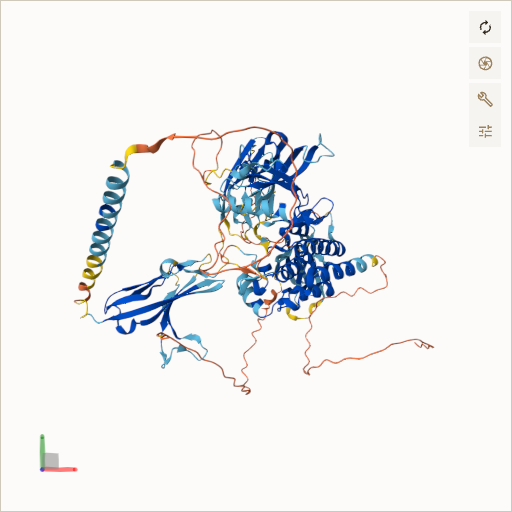
Fibroblast growth factor receptor 3
Tyrosine-protein kinase that acts as a cell-surface receptor for fibroblast growth factors and plays an essential role in the regulation of cell proliferation, differentiation and apoptosis. Plays an essential role in the regulation of chondrocyte differentiation, proliferation and apoptosis, and is required for normal skeleton development. Regulates both osteogenesis and postnatal bone mineralization by osteoblasts. Promotes apoptosis in chondrocytes, but can also promote cancer cell proliferation. Required for normal development of the inner ear. Phosphorylates PLCG1, CBL and FRS2. Ligand binding leads to the activation of several signaling cascades. Activation of PLCG1 leads to the production of the cellular signaling molecules diacylglycerol and inositol 1,4,5-trisphosphate. Phosphorylation of FRS2 triggers recruitment of GRB2, GAB1, PIK3R1 and SOS1, and mediates activation of RAS, MAPK1/ERK2, MAPK3/ERK1 and the MAP kinase signaling pathway, as well as of the AKT1 signaling pathway. Plays a role in the regulation of vitamin D metabolism. Mutations that lead to constitutive kinase activation or impair normal FGFR3 maturation, internalization and degradation lead to aberrant signaling. Over-expressed or constitutively activated FGFR3 promotes activation of PTPN11/SHP2, STAT1, STAT5A and STAT5B. Secreted isoform 3 retains its capacity to bind FGF1 and FGF2 and hence may interfere with FGF signaling
Diseases associated with FGFR3
Curated MONDO disease pages that list FGFR3 among their top associated genes.