
AlphaFold predicted structure
FH · P07954
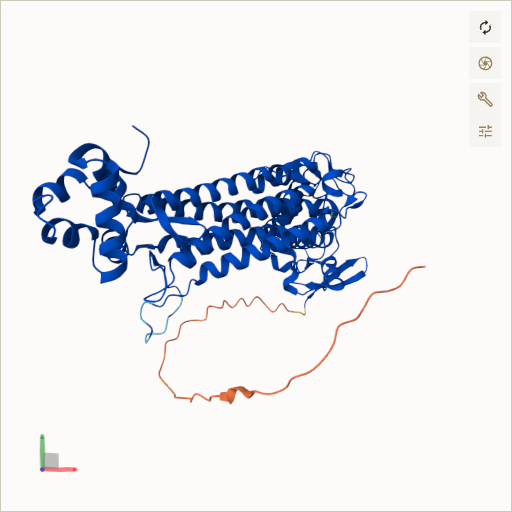
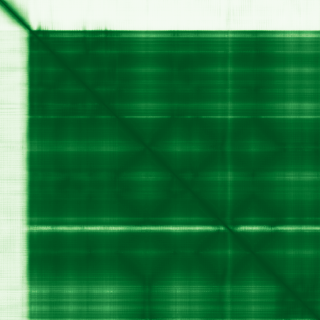
Mean pLDDT
92.7/ 100
Very high
510 residues
Confidence breakdown
- Very high(≥ 90)89%
- Confident(70–90)2%
- Low(50–70)0%
- Very low(< 50)9%
Open interactive 3D viewer
AlphaFold (Jumper et al., 2021) · CC BY 4.0
fumarate hydratase
Annotations refreshed 2 months ago.
Diagnostic Grade (Green)
Adult solid tumours cancer susceptibility
MONOALLELIC, autosomal or pseudoautosomal, imprinted status unknownAdult solid tumours for rare disease
MONOALLELIC, autosomal or pseudoautosomal, imprinted status unknownDDG2P
BIALLELIC, autosomal or pseudoautosomalEndometrial cancer pertinent cancer susceptibility
MONOALLELIC, autosomal or pseudoautosomal, NOT imprintedFetal anomalies
BIALLELIC, autosomal or pseudoautosomalFumarate hydratase-related tumour syndromes
MONOALLELIC, autosomal or pseudoautosomal, imprinted status unknownInherited phaeochromocytoma and paraganglioma
MONOALLELIC, autosomal or pseudoautosomal, NOT imprintedInherited phaeochromocytoma and paraganglioma excluding NF1
MONOALLELIC, autosomal or pseudoautosomal, NOT imprinted+13 more panels — install the extension to see the full list inline on any page.
hereditary leiomyomatosis and renal cell cancer
fumaric aciduria
Inherited cancer-predisposing syndrome
hereditary neoplastic syndrome
Multiple cutaneous leiomyomas
neurodegenerative disease
tricarboxylic acid cycle disorder
renal carcinoma
ovarian cancer
hereditary pheochromocytoma-paraganglioma
Score is the Open Targets composite evidence score (0-1). Higher = stronger gene-disease association.
Fumarate hydratase, mitochondrial
Catalyzes the reversible stereospecific interconversion of fumarate to L-malate (PubMed:30761759). Experiments in other species have demonstrated that specific isoforms of this protein act in defined pathways and favor one direction over the other (Probable)
FH · P07954
Mean pLDDT
92.7/ 100
Very high
510 residues
Confidence breakdown
AlphaFold (Jumper et al., 2021) · CC BY 4.0