
AlphaFold predicted structure
FLCN · Q8NFG4
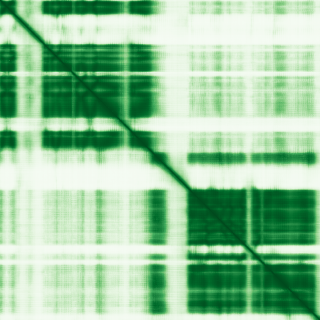
Mean pLDDT
78.2/ 100
Confident
579 residues
Confidence breakdown
- Very high(≥ 90)58%
- Confident(70–90)16%
- Low(50–70)7%
- Very low(< 50)19%
Open interactive 3D viewer
AlphaFold (Jumper et al., 2021) · CC BY 4.0
folliculin
Annotations refreshed 3 months ago.
Diagnostic Grade (Green)
Adult solid tumours cancer susceptibility
MONOALLELIC, autosomal or pseudoautosomal, imprinted status unknownAdult solid tumours for rare disease
MONOALLELIC, autosomal or pseudoautosomal, imprinted status unknownCystic kidney disease
MONOALLELIC, autosomal or pseudoautosomal, NOT imprintedInherited renal cancer
MONOALLELIC, autosomal or pseudoautosomal, NOT imprintedMultiple monogenic benign skin tumours
MONOALLELIC, autosomal or pseudoautosomal, NOT imprintedPneumothorax - familial
MONOALLELIC, autosomal or pseudoautosomal, NOT imprintedRenal cancer pertinent cancer susceptibility
MONOALLELIC, autosomal or pseudoautosomal, NOT imprintedThoracic aortic aneurysm or dissection
MONOALLELIC, autosomal or pseudoautosomal, NOT imprinted+4 more panels — install the extension to see the full list inline on any page.
Birt-Hogg-Dube syndrome 1
familial spontaneous pneumothorax
Birt-Hogg-Dube syndrome
pneumothorax
Birt-Hogg-Dubé syndrome
Spontaneous pneumothorax
Inherited cancer-predisposing syndrome
hereditary neoplastic syndrome
nonpapillary renal cell carcinoma
colorectal cancer
Score is the Open Targets composite evidence score (0-1). Higher = stronger gene-disease association.
Folliculin
Multi-functional protein, involved in both the cellular response to amino acid availability and in the regulation of glycolysis (PubMed:17028174, PubMed:18663353, PubMed:21209915, PubMed:24081491, PubMed:24095279, PubMed:31672913, PubMed:31704029, PubMed:32612235, PubMed:34381247, PubMed:36103527, PubMed:37079666). GTPase-activating protein that plays a key role in the cellular response to amino acid availability through regulation of the non-canonical mTORC1 signaling cascade controlling the MiT/TFE factors TFEB and TFE3 (PubMed:17028174, PubMed:18663353, PubMed:21209915, PubMed:24081491, PubMed:24095279, PubMed:24448649, PubMed:31672913, PubMed:31704029, PubMed:32612235, PubMed:36103527, PubMed:37079666). Activates mTORC1 by acting as a GTPase-activating protein: specifically stimulates GTP hydrolysis by RagC/RRAGC or RagD/RRAGD, promoting the conversion to the GDP-bound state of RagC/RRAGC or RagD/RRAGD, and thereby activating the kinase activity of mTORC1 (PubMed:24095279, PubMed:31672913, PubMed:31704029, PubMed:32612235, PubMed:37079666). The GTPase-activating activity is inhibited during starvation and activated in presence of nutrients (PubMed:31672913, PubMed:32612235). Acts as a key component for non-canonical mTORC1-dependent control of the MiT/TFE factors TFEB and TFE3, while it is not involved in mTORC1-dependent phosphorylation of canonical RPS6KB1/S6K1 and EIF4EBP1/4E-BP1 (PubMed:21209915, PubMed:24081491, PubMed:31672913, PubMed:32612235). In low-amino acid conditions, the lysosomal folliculin complex (LFC) is formed on the membrane of lysosomes, which inhibits the GTPase-activating activity of FLCN, inactivates mTORC1 and maximizes nuclear translocation of TFEB and TFE3 (PubMed:31672913). Upon amino acid restimulation, RagA/RRAGA (or RagB/RRAGB) nucleotide exchange promotes disassembly of the LFC complex and liberates the GTPase-activating activity of FLCN, leading to activation of mTORC1 and subsequent cytoplasmic retention of TFEB and TFE3 (PubMed:31672913). Indirectly acts as a positive regulator of Wnt signaling by promoting mTOR-dependent cytoplasmic retention of MiT/TFE factor TFE3 (PubMed:31272105). Required for the exit of hematopoietic stem cell from pluripotency by promoting mTOR-dependent cytoplasmic retention of TFE3, thereby increasing Wnt signaling (PubMed:30733432). Acts as an inhibitor of browning of adipose tissue by regulating mTOR-dependent cytoplasmic retention of TFE3 (By similarity). Involved in the control of embryonic stem cells differentiation; together with LAMTOR1 it is necessary to recruit and activate RagC/RRAGC and RagD/RRAGD at the lysosomes, and to induce exit of embryonic stem cells from pluripotency via non-canonical, mTOR-independent TFE3 inactivation (By similarity). In response to flow stress, regulates STK11/LKB1 accumulation and mTORC1 activation through primary cilia: may act by recruiting STK11/LKB1 to primary cilia for activation of AMPK resided at basal bodies, causing mTORC1 down-regulation (PubMed:27072130). Together with FNIP1 and/or FNIP2, regulates autophagy: following phosphorylation by ULK1, interacts with GABARAP and promotes autophagy (PubMed:25126726). Required for starvation-induced perinuclear clustering of lysosomes by promoting association of RILP with its effector RAB34 (PubMed:27113757). Regulates glycolysis by binding to lactate dehydrogenase LDHA, acting as an uncompetitive inhibitor (PubMed:34381247)
Curated MONDO disease pages that list FLCN among their top associated genes.
FLCN · Q8NFG4
Mean pLDDT
78.2/ 100
Confident
579 residues
Confidence breakdown
AlphaFold (Jumper et al., 2021) · CC BY 4.0