Skip to content
GenoLensGenoLens

FLT3

Chr 13q12.2

fms related receptor tyrosine kinase 3

Aliases:
STK1, FLK2, CD135
MANE:
ENST00000241453.12

Annotations refreshed 9 hours ago.

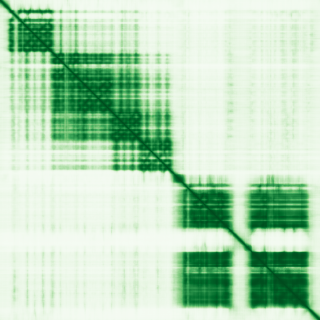
Predicted protein structure

Clinical relevance (Genomics England PanelApp)

Moderate Evidence (Amber)

  • Cytopenias and congenital anaemias

    MONOALLELIC, autosomal or pseudoautosomal, imprinted status unknown

Disease associations (Open Targets)

  • acute myeloid leukemia

    0.84
  • hepatocellular carcinoma

    0.67
  • gastrointestinal stromal tumor

    0.65
  • neoplasm

    0.65
  • renal cell carcinoma

    0.64
  • cancer

    0.63
  • myelofibrosis

    0.62
  • acute lymphoblastic leukemia

    0.60
  • primary myelofibrosis

    0.57
  • hypothyroidism

    0.57

Score is the Open Targets composite evidence score (0-1). Higher = stronger gene-disease association.

Protein function (UniProt)

Receptor-type tyrosine-protein kinase FLT3

Tyrosine-protein kinase that acts as a cell-surface receptor for the cytokine FLT3LG and regulates differentiation, proliferation and survival of hematopoietic progenitor cells and of dendritic cells. Promotes phosphorylation of SHC1 and AKT1, and activation of the downstream effector MTOR. Promotes activation of RAS signaling and phosphorylation of downstream kinases, including MAPK1/ERK2 and/or MAPK3/ERK1. Promotes phosphorylation of FES, FER, PTPN6/SHP, PTPN11/SHP-2, PLCG1, and STAT5A and/or STAT5B. Activation of wild-type FLT3 causes only marginal activation of STAT5A or STAT5B. Mutations that cause constitutive kinase activity promote cell proliferation and resistance to apoptosis via the activation of multiple signaling pathways

Curated MONDO disease pages that list FLT3 among their top associated genes.

Data sources: HGNC (CC BY 4.0), AlphaFold (CC BY 4.0, Jumper et al. Nature 2021), Genomics England PanelApp (CC BY 4.0), ClinGen, Open Targets (CC0), UniProt.

Not for sole clinical decision-making. Always verify against primary sources.