Skip to content
GenoLensGenoLens

FLT4

Chr 5q35.3

fms related receptor tyrosine kinase 4

Aliases:
VEGFR3, PCL, VEGFR-3
MANE:
ENST00000261937.11

Annotations refreshed 1 month ago.

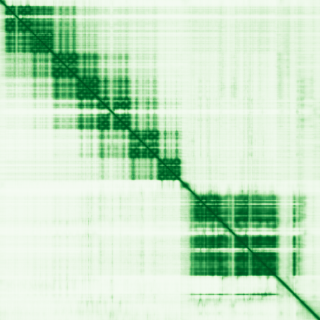
Predicted protein structure

Clinical relevance (Genomics England PanelApp)

Diagnostic Grade (Green)

  • DDG2P

    MONOALLELIC, autosomal or pseudoautosomal, imprinted status unknown
  • Fetal anomalies

    MONOALLELIC, autosomal or pseudoautosomal, imprinted status unknown
  • Fetal hydrops

    MONOALLELIC, autosomal or pseudoautosomal, NOT imprinted
  • Primary lymphoedema

    MONOALLELIC, autosomal or pseudoautosomal, NOT imprinted
  • Vascular skin disorders

    MONOALLELIC, autosomal or pseudoautosomal, NOT imprinted
  • Rare genetic inflammatory skin disorders

    MONOALLELIC, autosomal or pseudoautosomal, imprinted status unknown
  • Cerebral vascular malformations

  • Familial non syndromic congenital heart disease

    MONOALLELIC, autosomal or pseudoautosomal, imprinted status unknown

+2 more panels — install the extension to see the full list inline on any page.

Disease associations (Open Targets)

  • lymphatic malformation 1

    0.78
  • congenital heart defects, multiple types, 7

    0.77
  • Milroy disease

    0.75
  • hepatocellular carcinoma

    0.68
  • gastrointestinal stromal tumor

    0.65
  • non-small cell lung carcinoma

    0.64
  • capillary infantile hemangioma

    0.63
  • neoplasm

    0.62
  • renal cell carcinoma

    0.61
  • thyroid gland carcinoma

    0.60

Score is the Open Targets composite evidence score (0-1). Higher = stronger gene-disease association.

Protein function (UniProt)

Vascular endothelial growth factor receptor 3

Tyrosine-protein kinase that acts as a cell-surface receptor for VEGFC and VEGFD, and plays an essential role in adult lymphangiogenesis and in the development of the vascular network and the cardiovascular system during embryonic development. Promotes proliferation, survival and migration of endothelial cells, and regulates angiogenic sprouting. Signaling by activated FLT4 leads to enhanced production of VEGFC, and to a lesser degree VEGFA, thereby creating a positive feedback loop that enhances FLT4 signaling. Modulates KDR signaling by forming heterodimers. The secreted isoform 3 may function as a decoy receptor for VEGFC and/or VEGFD and play an important role as a negative regulator of VEGFC-mediated lymphangiogenesis and angiogenesis. Binding of vascular growth factors to isoform 1 or isoform 2 leads to the activation of several signaling cascades; isoform 2 seems to be less efficient in signal transduction, because it has a truncated C-terminus and therefore lacks several phosphorylation sites. Mediates activation of the MAPK1/ERK2, MAPK3/ERK1 signaling pathway, of MAPK8 and the JUN signaling pathway, and of the AKT1 signaling pathway. Phosphorylates SHC1. Mediates phosphorylation of PIK3R1, the regulatory subunit of phosphatidylinositol 3-kinase. Promotes phosphorylation of MAPK8 at 'Thr-183' and 'Tyr-185', and of AKT1 at 'Ser-473'

Curated MONDO disease pages that list FLT4 among their top associated genes.

Data sources: HGNC (CC BY 4.0), AlphaFold (CC BY 4.0, Jumper et al. Nature 2021), Genomics England PanelApp (CC BY 4.0), ClinGen, Open Targets (CC0), UniProt.

Not for sole clinical decision-making. Always verify against primary sources.