AlphaFold predicted structure
FLVCR2 · Q9UPI3
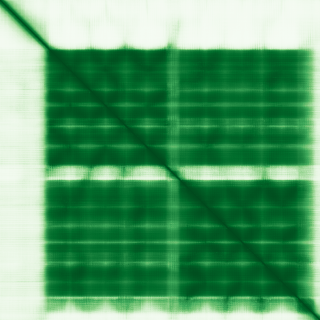
Mean pLDDT
80.6/ 100
Confident
526 residues
Confidence breakdown
- Very high(≥ 90)56%
- Confident(70–90)22%
- Low(50–70)5%
- Very low(< 50)17%
AlphaFold (Jumper et al., 2021) · CC BY 4.0
FLVCR choline and putative heme transporter 2
Annotations refreshed 10 hours ago.
Diagnostic Grade (Green)
DDG2P
BIALLELIC, autosomal or pseudoautosomalFetal anomalies
BIALLELIC, autosomal or pseudoautosomalHydrocephalus
BIALLELIC, autosomal or pseudoautosomalInherited white matter disorders
BIALLELIC, autosomal or pseudoautosomalIntellectual disability
BIALLELIC, autosomal or pseudoautosomalWhite matter disorders and cerebral calcification - narrow panel
BIALLELIC, autosomal or pseudoautosomalCerebral vascular malformations
BIALLELIC, autosomal or pseudoautosomalFowler syndrome
hereditary disease
Increased total eosinophil count
sialolithiasis
bilirubin metabolism disease
posterior column ataxia-retinitis pigmentosa syndrome
multiple sclerosis
Parkinson disease
acute myeloid leukemia
cancer
Score is the Open Targets composite evidence score (0-1). Higher = stronger gene-disease association.
Choline/ethanolamine transporter FLVCR2
Choline uniporter that specifically mediates choline uptake at the blood-brain-barrier (PubMed:38302740, PubMed:38778100, PubMed:40972734). Responsible for the majority of choline uptake across the blood-brain-barrier from the circulation into the brain (By similarity). Choline, a nutrient critical for brain development, is a precursor of phosphatidylcholine, as well as betaine (By similarity). Also mediates transport of ethanolamine (PubMed:38778100). Choline and ethanolamine transport is not coupled with proton transport and is exclusively driven by the choline gradient across the plasma membrane (PubMed:38778100). However, the presence of an inwardly directed proton gradient enhances choline uptake (By similarity). Also acts as a heme b transporter (PubMed:20823265, PubMed:32973183). Required to regulate mitochondrial respiration processes, ATP synthesis and thermogenesis (PubMed:32973183). At low heme levels, interacts with components of electron transfer chain (ETC) complexes and ATP2A2, leading to ubiquitin-mediated degradation of ATP2A2 and inhibition of thermogenesis (PubMed:32973183). Upon heme binding, dissociates from ETC complexes to allow switching from mitochondrial ATP synthesis to thermogenesis (PubMed:32973183)
FLVCR2 · Q9UPI3

Mean pLDDT
80.6/ 100
Confident
526 residues
Confidence breakdown
AlphaFold (Jumper et al., 2021) · CC BY 4.0