
AlphaFold predicted structure
FOXG1 · P55316
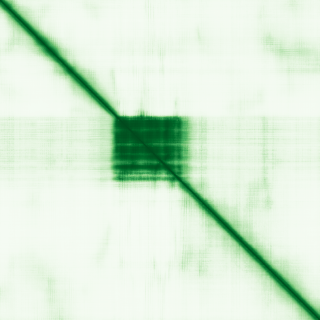
Mean pLDDT
57.5/ 100
Low
489 residues
Confidence breakdown
- Very high(≥ 90)15%
- Confident(70–90)12%
- Low(50–70)20%
- Very low(< 50)53%
Open interactive 3D viewer
AlphaFold (Jumper et al., 2021) · CC BY 4.0
forkhead box G1
Annotations refreshed 2 months ago.
Diagnostic Grade (Green)
Childhood onset dystonia, chorea or related movement disorder
MONOALLELIC, autosomal or pseudoautosomal, imprinted status unknownDDG2P
MONOALLELIC, autosomal or pseudoautosomal, imprinted status unknownEarly onset dystonia
MONOALLELIC, autosomal or pseudoautosomal, NOT imprintedEarly onset or syndromic epilepsy
MONOALLELIC, autosomal or pseudoautosomal, NOT imprintedFetal anomalies
MONOALLELIC, autosomal or pseudoautosomal, imprinted status unknownIntellectual disability
MONOALLELIC, autosomal or pseudoautosomal, NOT imprintedSevere microcephaly
MONOALLELIC, autosomal or pseudoautosomal, NOT imprintedAdult onset dystonia, chorea or related movement disorder
+2 more panels — install the extension to see the full list inline on any page.
FOXG1 disorder
Rett syndrome
hereditary disease
neurodevelopmental disorder
mathematical ability
undetermined early-onset epileptic encephalopathy
atypical Rett syndrome
placenta praevia
Strabismus
Abnormality of the nervous system
Score is the Open Targets composite evidence score (0-1). Higher = stronger gene-disease association.
Forkhead box protein G1
Transcription repression factor which plays an important role in the establishment of the regional subdivision of the developing brain and in the development of the telencephalon
Curated MONDO disease pages that list FOXG1 among their top associated genes.
FOXG1 · P55316
Mean pLDDT
57.5/ 100
Low
489 residues
Confidence breakdown
AlphaFold (Jumper et al., 2021) · CC BY 4.0